This group of college students created a $9 indie game. How did it move over ten thousand players in 4 hours? | Interview with the Team Behind "Aliya
This article is reproduced with permission from Qingbaoji.
Written by Caibao
Layout by Luoya
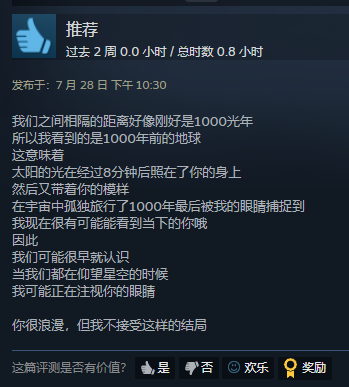
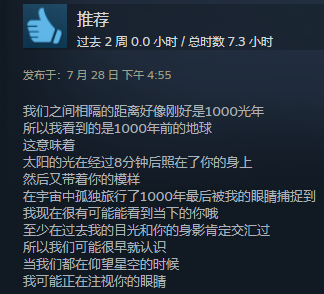
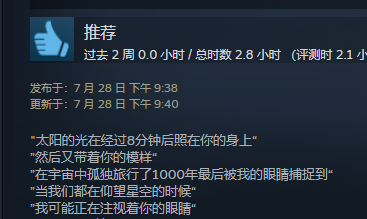
"The distance between us seems to be exactly 1,000 light-years"
"So what I'm seeing is Earth from 1,000 years ago"
"Which means"
"The light from the Sun touches you after 8 minutes"
"Then, carrying your image"
"It travels alone through the universe for 1,000 years before finally being caught by my eyes"
"Right now, I might actually be able to see the current you"
"Therefore"
"We might have known each other long ago"
"When we both look up at the stars"
"I might be staring right into your eyes"
This confession, brimming with the macroscopic romance of the universe and tinged with a science-nerd flavor, comes from a girl. She is alone, stranded in a remote corner of the universe 1,000 light-years away from you, and will run out of oxygen and die on an unfamiliar planet in just two minutes.
You can't do anything about it. You're just an ordinary person who wanted to play on the computer after work, only to find that for some reason Steam has connected to her spaceship's central control system. You meet through a miracle of the universe and start chatting by chance. There's no grand epic, no opera spanning the galaxy. You really just happen to exchange a few days of casual talk, nothing more.
You can't save her. Her companions are all dead, the spaceship is shattered, and the sulfur dioxide concentration in the atmosphere has reached 1.3%. She has been abandoned by the corporation; no rescue team will bother to mobilize for her. Most importantly—
You live in 2024, while she, 1,000 light-years away, lives in 3024.
But she isn't lonely. She even sends you a selfie with a smile. Because you're still with her.
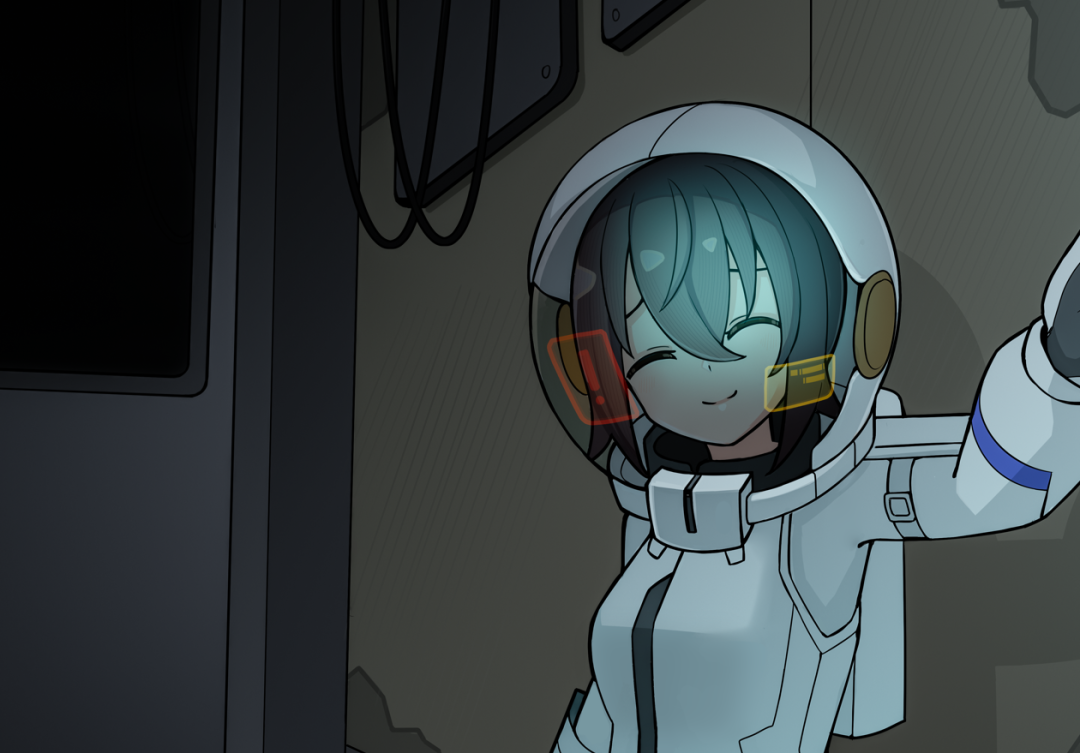
Her name is Aliya. She asks you to turn off the heart rate monitor interface on your computer. She doesn't want you to see the moment her life reaches zero.
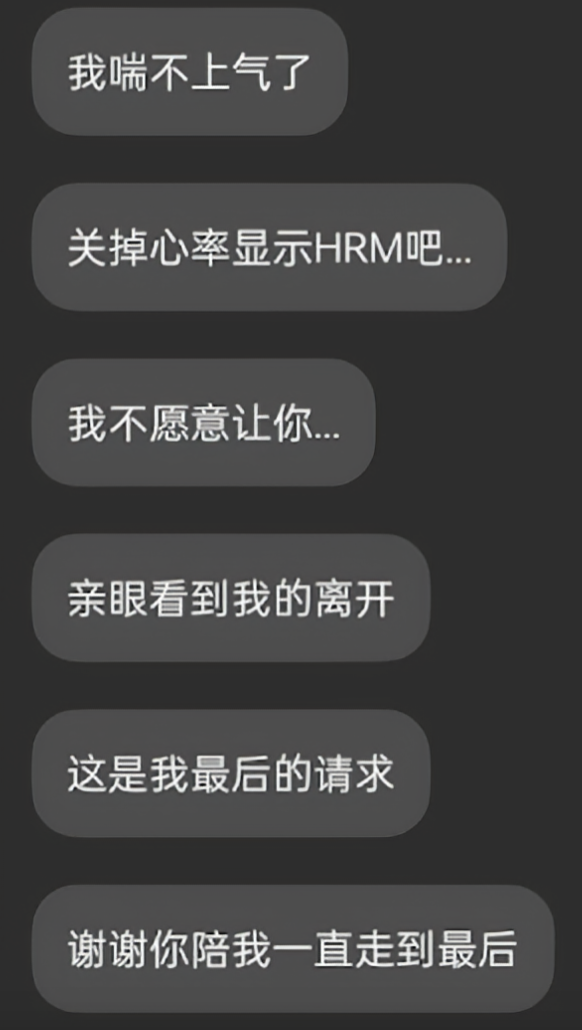
You respect her final wish.

No more new messages from her.
A few minutes later, clinging to a sliver of hope, you open the HRM again, wishing for a miracle rescue—
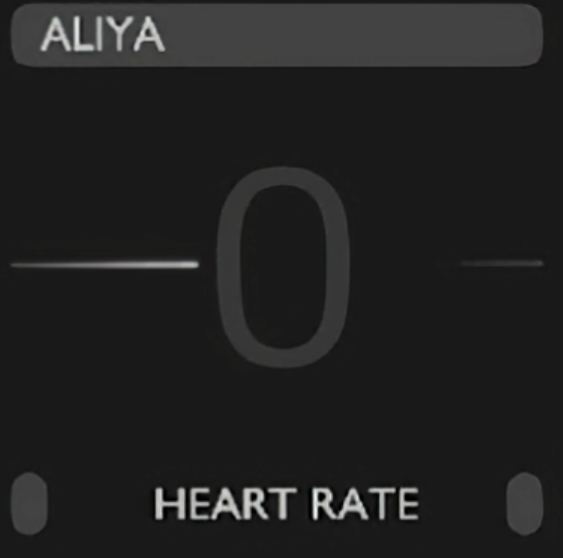
But reality is merciless.
You refuse to accept this ending, screaming endlessly into the chat window that will never reply.
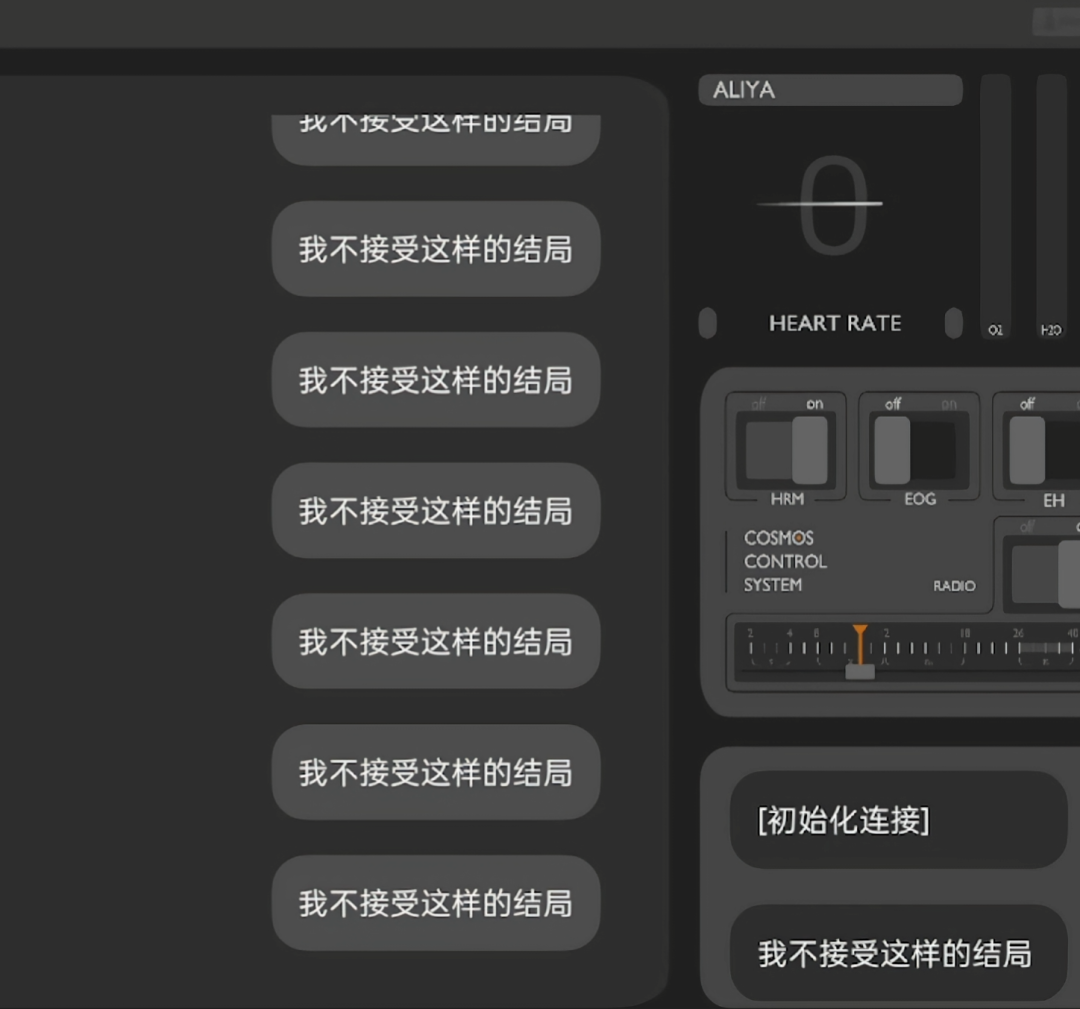
Then you discover that thousands of players feel the same way... refusing to accept this ending:

But at the same time, another group of players have already moved on, spamming in the comment section the final cosmic romance Aliya left them—the science-nerd confession from the beginning:
...
Yes, that's the current state of 彼方的她-Aliya—a text adventure game priced at just ¥9, small in scale and simple in design, yet carrying the heavy and turbulent emotions of countless players, turning them into broken-record repeaters drowning in sorrow.
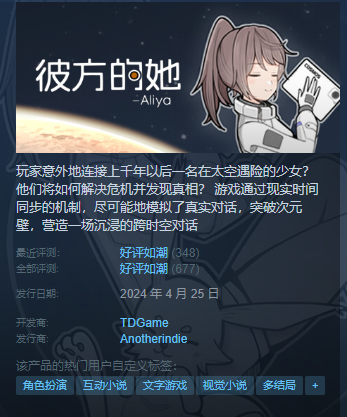
Of course, the opening story is just one of the game's five endings. Developed by TDGame and published by Anotherindie, 彼方的她-Aliya is a multi-ending text adventure game in the "Lifeline-like" genre.
"Lifeline-like" refers to a subcategory of text adventure games. As the name suggests, similar to the famous Lifeline series, the story progresses by simulating a "real conversation between the player and the character," with the ultimate goal of helping the protagonist "escape." This type of game emphasizes "realism," syncing with real time; the player plays as themselves, and each response may take minutes or even hours to receive. The last time a game of this kind broke into the mainstream was the well-known Chinese title 异次元通讯.
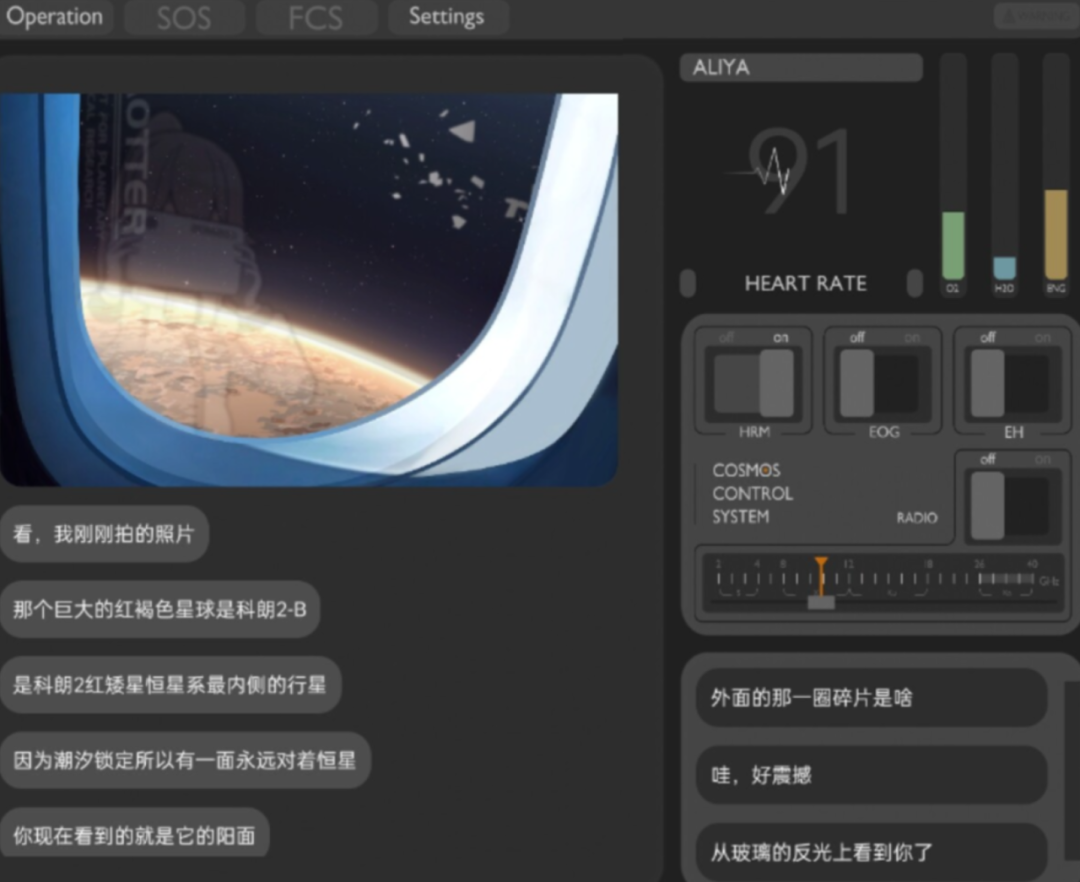
The plot of 彼方的她-Aliya is more straightforward—as mentioned at the start, when you open the game, you inexplicably connect to the main control computer of a small spaceship adrift 1,000 light-years away. The ship seems to have just suffered a disaster; the situation is dire. In the chaos, someone frantically consults "you" on the correct medical measures to save a companion's life. The other party mistakenly believes you are still the ship's main AI, COSMOS, unaware that you have taken its place. So, your next sentence will determine whether a life lives or dies.
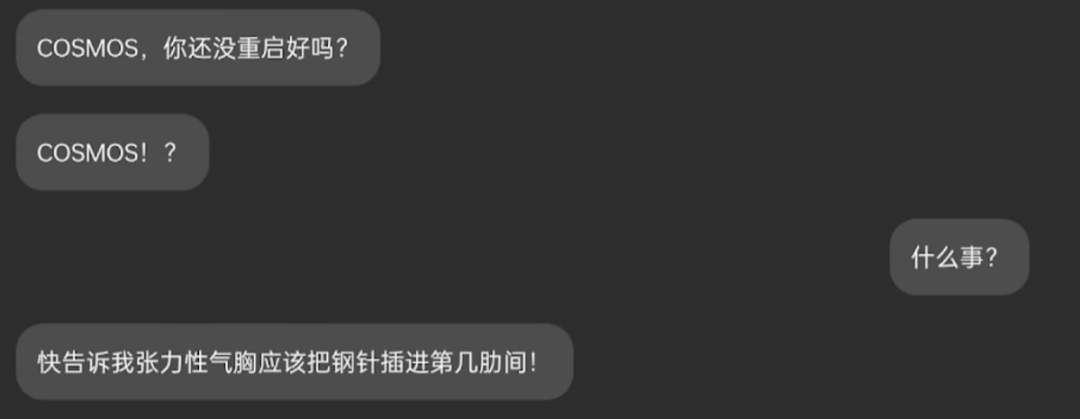
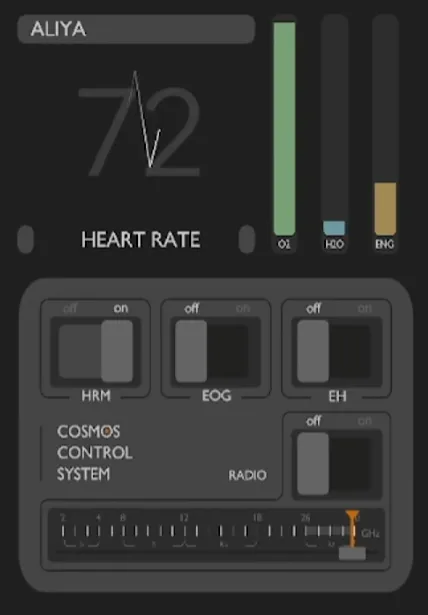
After handling the situation, the other party slowly realizes that you are not COSMOS but a living human being from somewhere unknown. Her spaceship is on the verge of collapse, and she can only turn to you for help. As you talk, you find it hard to communicate—you are separated by a time difference of 1,000 years. She is Aliya from 3024, and you are an ordinary player from 2024. Neither of you knows how you suddenly connected across time and space. But no matter what, you are Aliya's only lifeline. From here, you need to help Aliya repair the damaged ship, check surrounding radio signals, monitor the ship's energy and oxygen levels, and search step by step for hope of survival—
Meanwhile, you chat with Aliya, get to know each other, and exchange views on the chasm in human civilization shaped by a thousand-year time gap—
That's the story of 彼方的她-Aliya.
In fact, from the description above, you may already notice that even compared to other excellent "Lifeline-like" games, this title features many novel and imaginative design highlights. Despite its touching script, it's those creative designs that truly give the game its soul. Without these mechanics, no matter how well-written the story, it would lack expressive power.
Due to the game's small scale and niche genre, the development team, Tongdian Game Studio, was also quite strapped. In truth, 彼方的她-Aliya didn't have much promotion—its current "Overwhelmingly Positive" reviews are largely due to word of mouth from players—much like Astlibra Revision back in the day. It's a dream that many game developers yearn for but can rarely achieve.
Saying the development team was strapped is no exaggeration—this team, formed by a group of college students, had empty pockets. They truly relied on taking on outsourcing work until they were burnt out, just to scrape together enough funds to support 彼方的她-Aliya. That's impressive.
This time, Qingbaoji is fortunate to have contacted the development team of 彼方的她-Aliya—the game studio [Tongdian Game Studio] from Chengdu University of Information Technology—and chatted with the game's producer Wuli and the team's operations lead Steve. How did these young people, working themselves to the bone on outsourcing to fund their passion project, come up with a bunch of creative "game mechanics" within the framework of a "text adventure game"? And how did they manage to create their first commercial game?
1. "The story moved players to spam the comments, and outsiders thought we bought bots"
"Shortly after the game launched, the comment section was flooded with players repeating the same lines over and over, like 'I won't accept this ending.' There were so many repetitions that many users on Zhihu accused us of hiring bots..."
Talking about the player spamming phenomenon mentioned at the beginning of the article, producer Wuli said helplessly.

Whether on Bilibili, Zhihu, or the Steam review section, you can see countless comments repeating two golden lines from the game. One is "I won't accept this ending," and the other is the romantic confession spanning 1,000 light-years.

"But actually, back when there were very few reviews, seeing player feedback felt like half of my dream had come true. When I first wrote that line and tested it, our operations lead Steve said that these sentences would definitely become catchphrases passed around by word of mouth in the player community. And he was right," Wuli said.
Especially in the complex gaming environment of 2024, a "viral line" can indeed be more effective than many marketing methods. And indeed, they succeeded.
The truth is, Tongdian Game Studio didn't have the money to buy bots. The flood of comments was purely the result of players spreading the word. During the development of this game, Tongdian had to bear a fixed monthly expense of ten to twenty thousand yuan, and the six full-time members of the studio came from families with very limited financial means. They could only desperately take on outsourcing jobs to earn extra money to fund the game; otherwise, they would literally starve. It was that extreme.
2. The Golden Rule of Realism
Wuli believes that the reason the "story" resonated so strongly with players is mainly due to a combination of multiple factors.
First, Tongdian Game Studio is not a development team centered on "scriptwriting." Wuli, who served as the writer this time, specializes in system and numerical design. The widely praised storyline actually originated from a few "ideas."
Although this is a "text adventure game," the game didn't start from a script—they habitually first determine "what experience they want players to have," then "what mechanics or interactions can achieve that experience," and finally "what script is needed to support those mechanics." This might seem "backwards" for a story-driven game, but in reality, this approach reflects the script creation philosophy commonly used in commercial game development today.
This is clearly shown in the project initiation process they wrote on Zhihu:
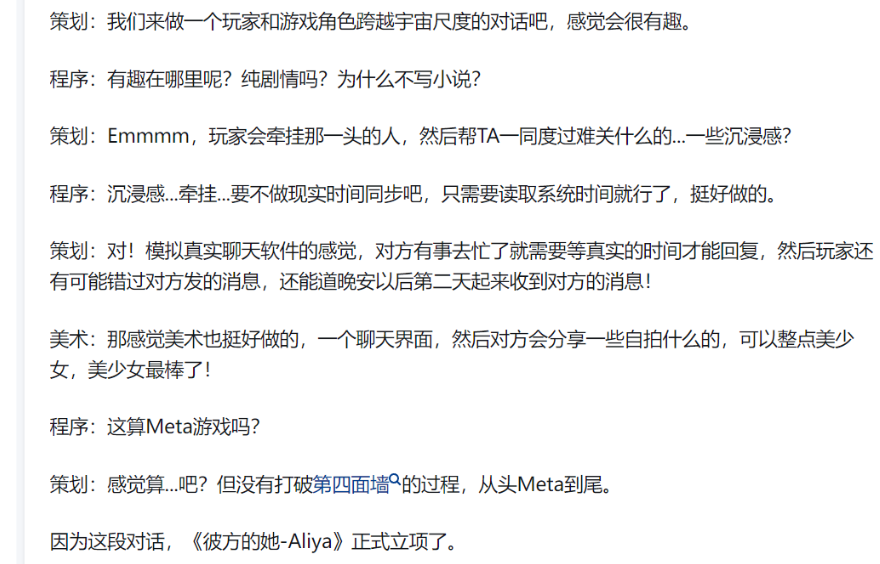
For example, to make players feel the realism of conversing with the girl in real time, they chose the "Lifeline-like" game format. To make players willing to help Aliya / feel the weight of her death, they designed Aliya to be cute and likable. To make players feel that Aliya is a human with emotions and a life, they introduced the "heart rate monitor" mechanic, the variable speed of dialogue boxes, and the system for missing conversations. To make players feel "the pressure and responsibility of bearing another's life," they visualized "oxygen levels" and included multiple mechanics that can lead to Aliya's death. Of course, these cause-and-effect relationships are not strictly one-to-one but form an interconnected logical network—all designs serve the purpose of 'realism.'

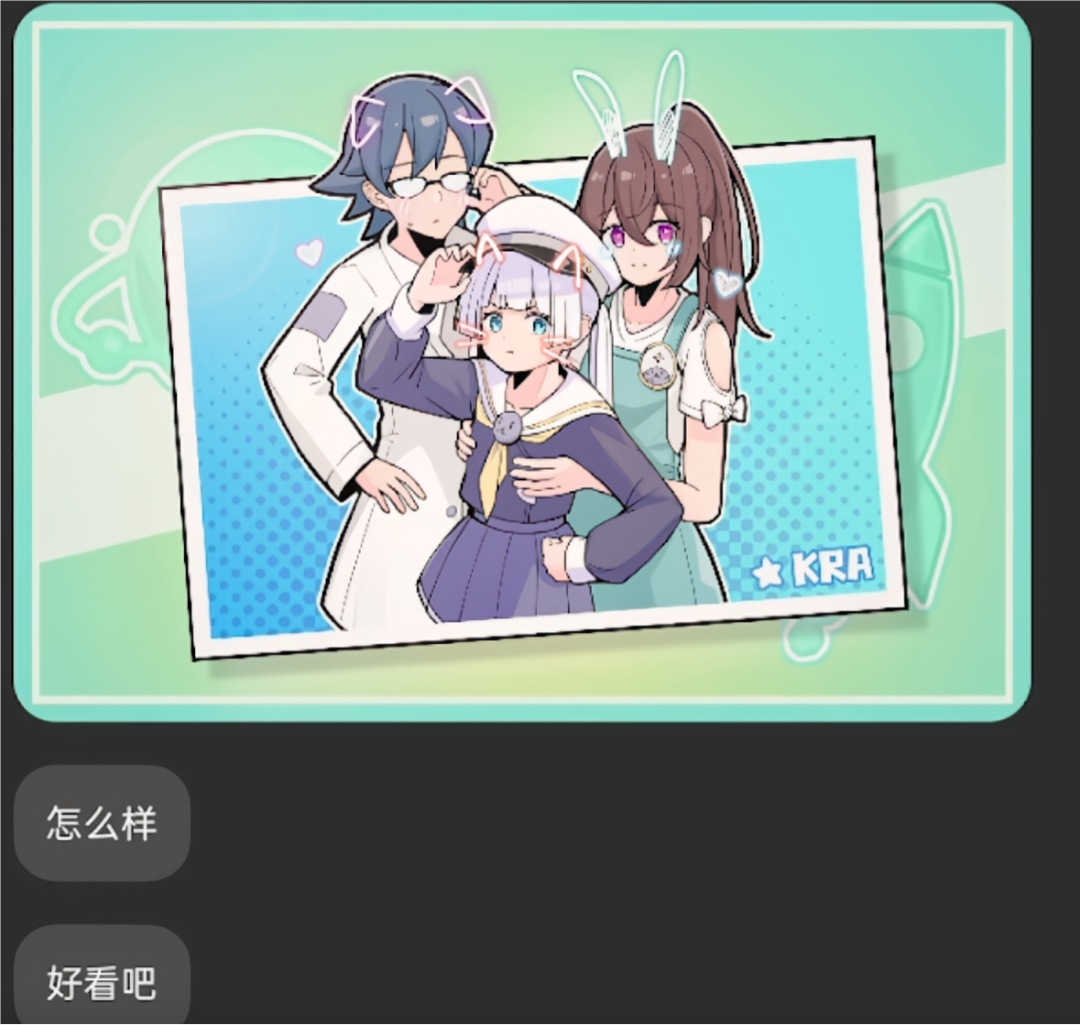
During early version testing, they received player feedback that the heroine's personality was too rigid and annoying, somewhat like "a Taylor (the male protagonist of Lifeline) without his mouthiness," bossing players around. This made players disinterested in her, unwilling to help, and indifferent to her fate. Wuli and the team realized that if the heroine wasn't likable enough, it would be devastating for the effects they wanted to achieve with all subsequent gameplay.
So, how could they make her more likable? At the time, Wuli watched Iwai Shunji's The Case of Hana & Alice, and on a whim, decided to make Aliya more "childish," or rather more "lively, cute, and playful." Many scenes were not designed to advance the plot but simply to create a chat experience between the player and Aliya.
Although Aliya now seems less reliable in terms of space exploration expertise, Wuli believes this adjustment was necessary to make players love the character.
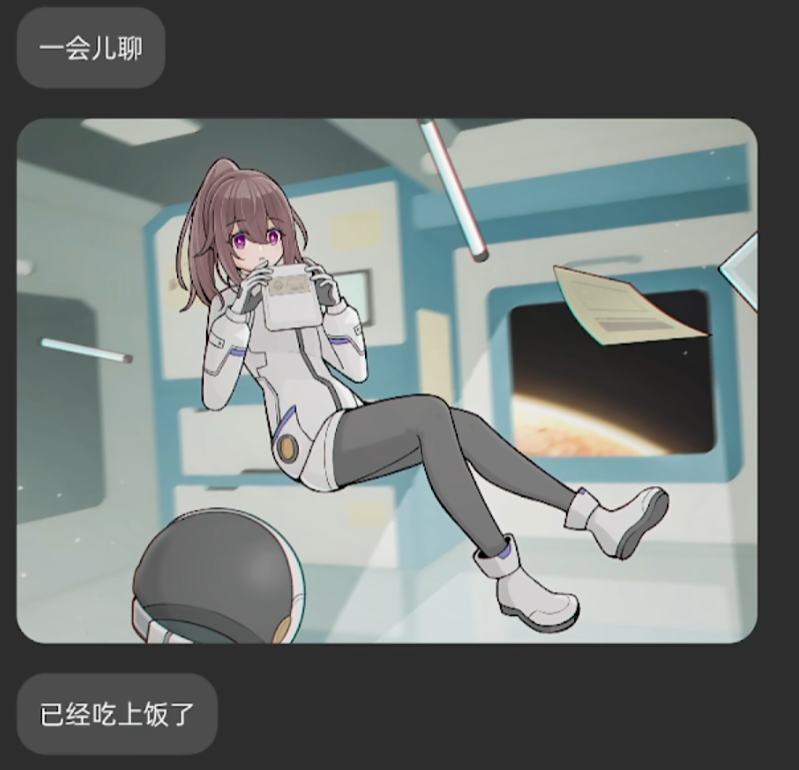
Making the heroine likable wasn't enough; she also needed to be real.
Back then, Wuli and the team established a principle (they called it the Golden Rule): whether it's system development, writing, or mechanic design, everything must follow the principle of "base everything on reality." For instance, colloquial speech, verbal tics, mental overload, swearing in emergencies, humming while showering, etc., all had to be preserved in the game. They gave an example on Zhihu: if you ignore Aliya for too long, she will actually die from oxygen deprivation (like in Metal Gear Solid).
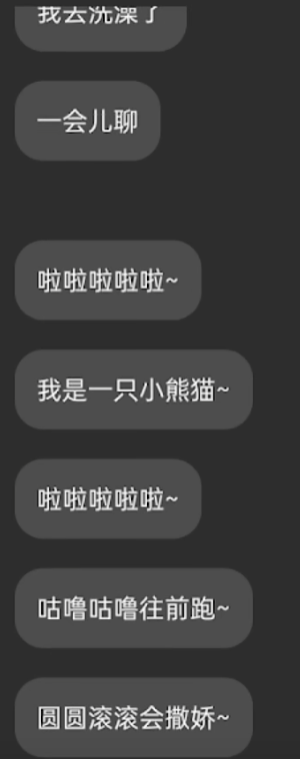

To make the dialogue colloquial, Wuli also retained some grammatical quirks in the game text, which caused a minor issue. For example, Aliya had a line:
"I'm listening in."
At first glance, it seems odd, but it means "I'm listening." Wuli is from Hubei; if written according to Hubei dialect habits, this sentence would indeed have that inverted structure. He didn't realize the line had regional characteristics. Some players didn't understand and reported it as a typo, which made him aware of the issue—but he still kept it.
"Aliya's ancestral home might also be Hubei."
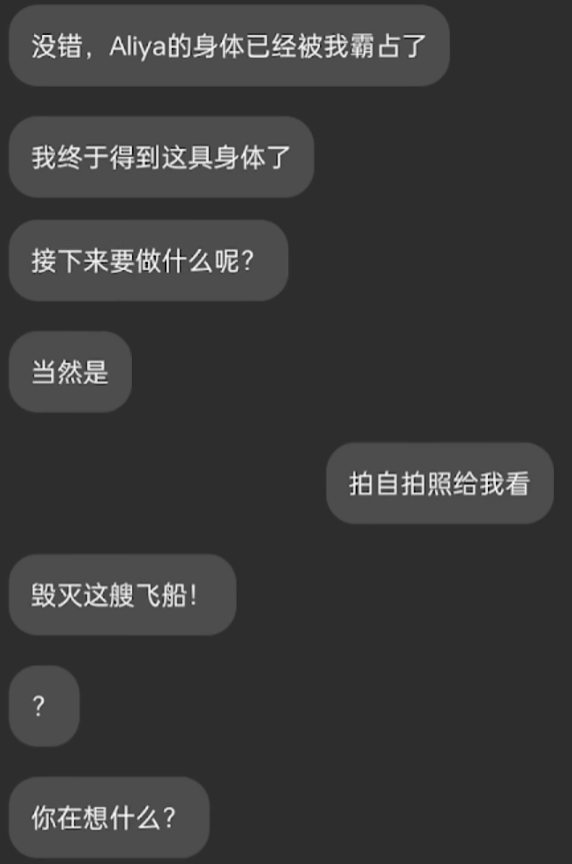
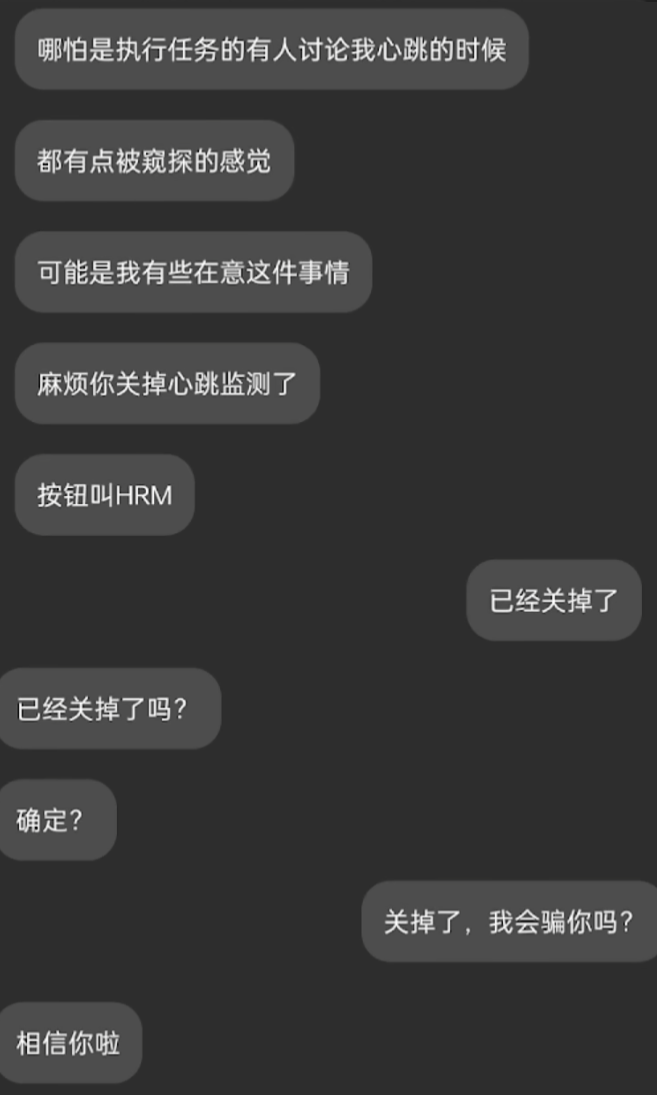
Wuli said that although many players felt the game was short and that many choices felt meaningless, the current text actually amounts to 50,000 words. He invested a large amount of text in the variations of different choices and Aliya's responses to different options and decisions. For example, if the player stays silent and skips a topic, or if Aliya waits too long and goes to do something else, there are different variations. These fine-grained branches consume a lot of text, and he believes it's precisely these complex branches that make the dialogue with Aliya more natural and realistic.
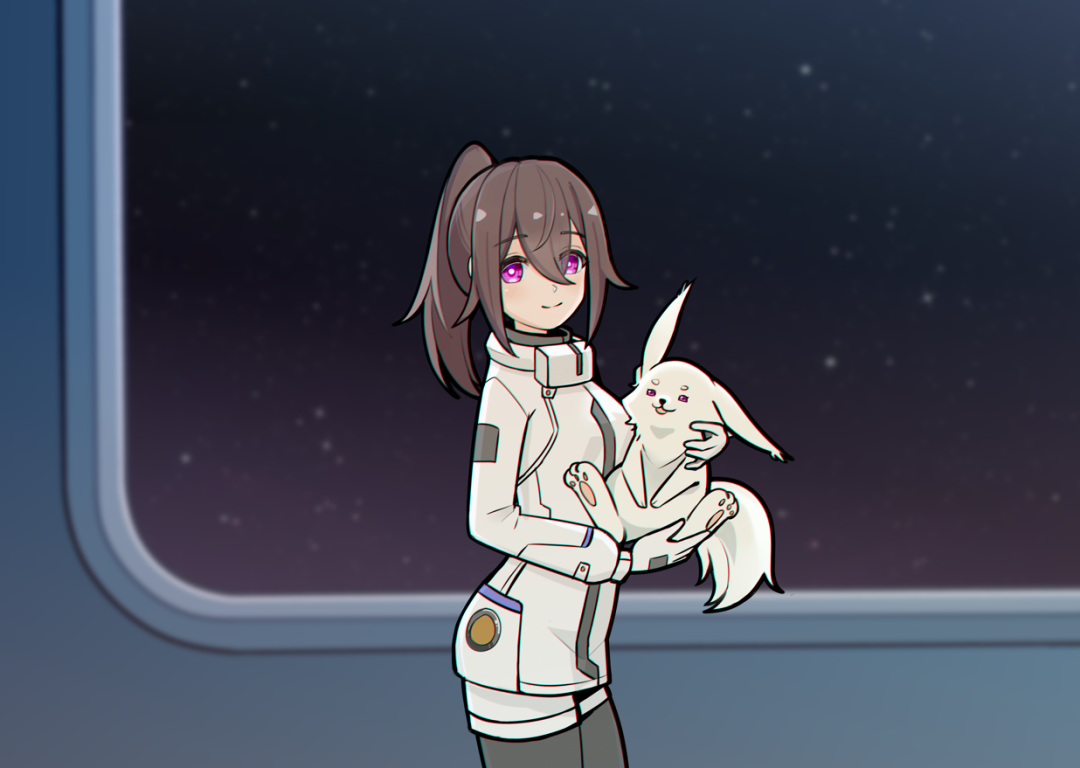
So, after shaping a real and lovable Aliya—
They mercilessly handed the remote control that kills Aliya to the player.
After the player has had a certain level of emotional exchange with Aliya, the story unlocks a new gameplay mechanic that truly carries the risk of death: controlling the engine.

Specifically, if the player intercepts a radio signal, it means there might be a living person nearby, so they need to control the ship to go to the signal's coordinates for rescue. But the ship is half-destroyed, and COSMOS control is already in the player's hands, so the "engine switch" can only be operated by the player themselves.
And the operation method, simply put, is counting seconds.
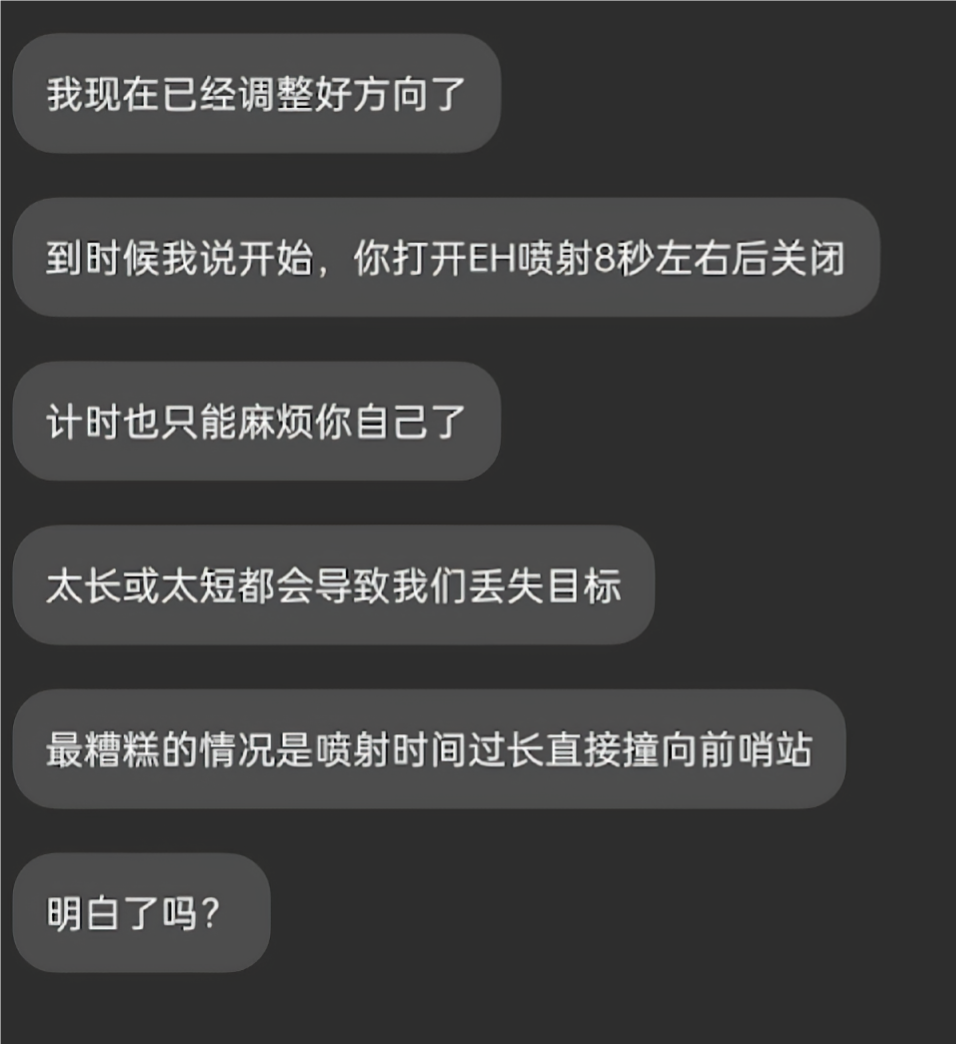
Don't dismiss counting seconds as too simple. After a series of realistic interactions in the early game, most players have already come to treat Aliya as a real girl. In this context, the game tells you that her life or death is now in your hands. If you miscount, she will die because of your mistake, and die alone, miserably in the void of space.
And at this very moment, to reassure Aliya, the player's words are overconfident.

You act casual, but the player is already sweating bullets, thinking, "If I make one mistake, she's dead." Even the simplest counting becomes terrifyingly uncertain. This design appears twice in the game: once early in the story, and once near the end. The first is 8 seconds, the second is 15 seconds. Especially during the second burn, at a critical life-or-death moment, those 15 seconds of silence feel like an eternity. Who would have thought that a "counting seconds" mechanic, built on a foundation of realism, could become such a nerve-wracking experience?
That's exactly the effect Wuli aimed for.
If the player miscounts and causes Aliya's death, you will watch her heart rate drop to zero. The game provides no "retry" function. Dead is dead; you have to start over from the beginning, no room for negotiation. Given that progressing through the dialogue requires waiting for real-time synchronization, reaching the death point again would take a very long time. For a text adventure game, such a death penalty is extremely severe, almost counter to game design principles.
But Wuli ultimately decided to keep it that way.
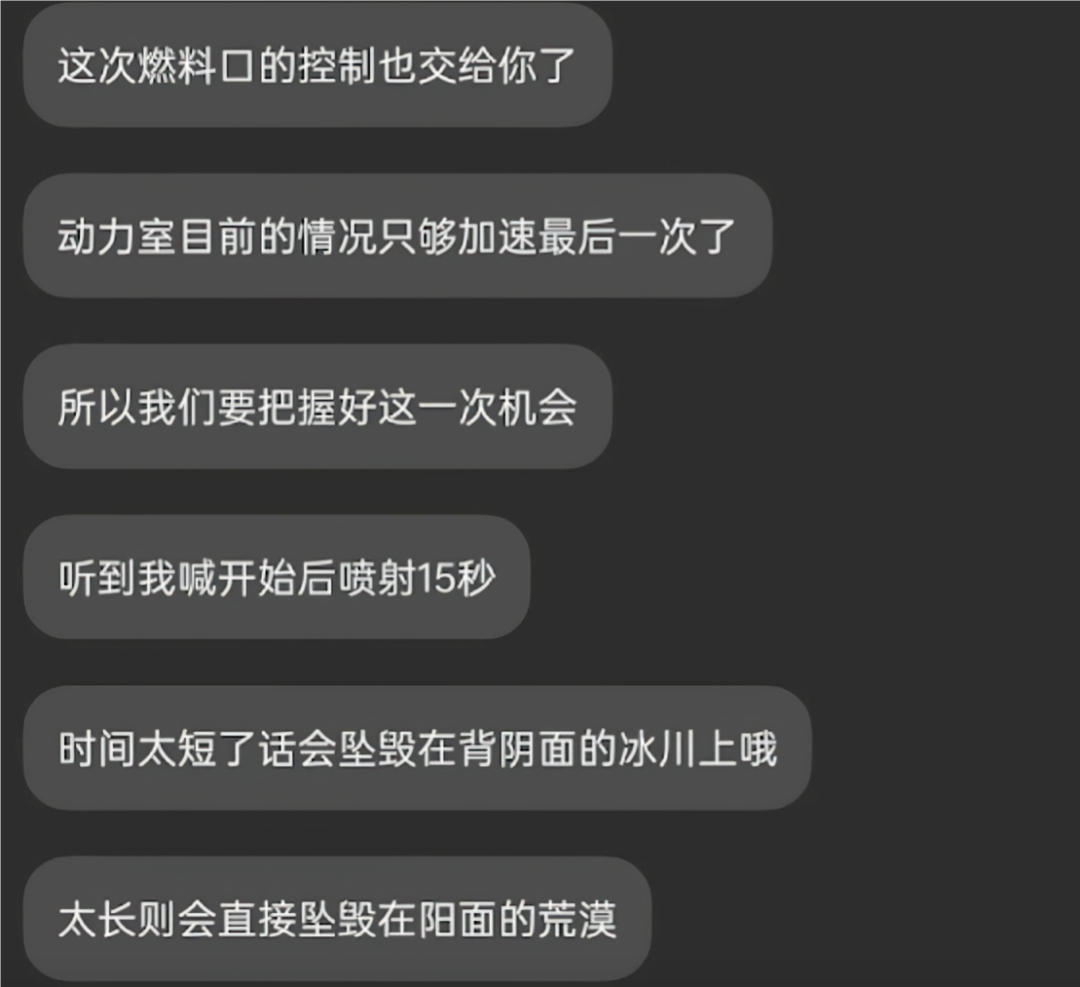
It's not that Wuli wanted to punish players intentionally. In fact, the timing window for counting is quite generous. For the 8-second count, a 6-10 second range counts as a success; for the 15-second count, anything between 10-20 seconds works, and Aliya will even urge you to shut down the engine at 17 seconds.
Wuli also thought long and hard about whether to give players a checkpoint if they failed. He said that many AAA games design "bridge collapse" sequences where, even if the player moves slowly, the bridge collapses at a correspondingly slower pace. If the player still dies, they just return to a checkpoint a few seconds earlier. For thrilling AAA games, that might not matter much—but for 彼方的她-Aliya, it would severely break immersion.
After all, the game emphasizes "realism" from start to finish. Giving a retry mechanic all of a sudden would ruin both the weight of life and the emotional immersion. So in the end, he kept the severe death penalty, making the timing lenient enough for players to succeed but punishing failure harshly.
Wuli believes, "By the time players reach this point, they already feel the tension of 'I must do this right, or she will die,' and they care deeply about Aliya's safety. This matches the player's flow. Relaxing the penalty here might actually destroy the hard-earned emotions."
This also shows that the script originated from ideas. The desire to "make players experience the tension of accidentally causing the heroine's death" led to the counting mechanic, which in turn led to the plot about finding coordinates and sailing the ship. But even this counting mechanic went through several iterations, from "controlling the hatch" to "controlling the engine"...
As an indie game development team, Tongdian Game Studio is indeed rare in their painstaking attention to these minute details.
3. The Science Nerd Romanticism Across the Stars
Aside from the gameplay and mechanic design, the script is also filled with humanistic romance and brilliant sci-fi highlights, which is reflected in their iterative thinking on the story.
For example, the ending shown at the beginning of the article—the confession spanning 1,000 light-years—wasn't originally there. In the first and second versions of the game, Wuli didn't include it. After finishing those versions, they felt something was missing; they needed a climactic scene where the ending and Aliya come together emotionally. So the third version revolved around the core idea of "how to meet."
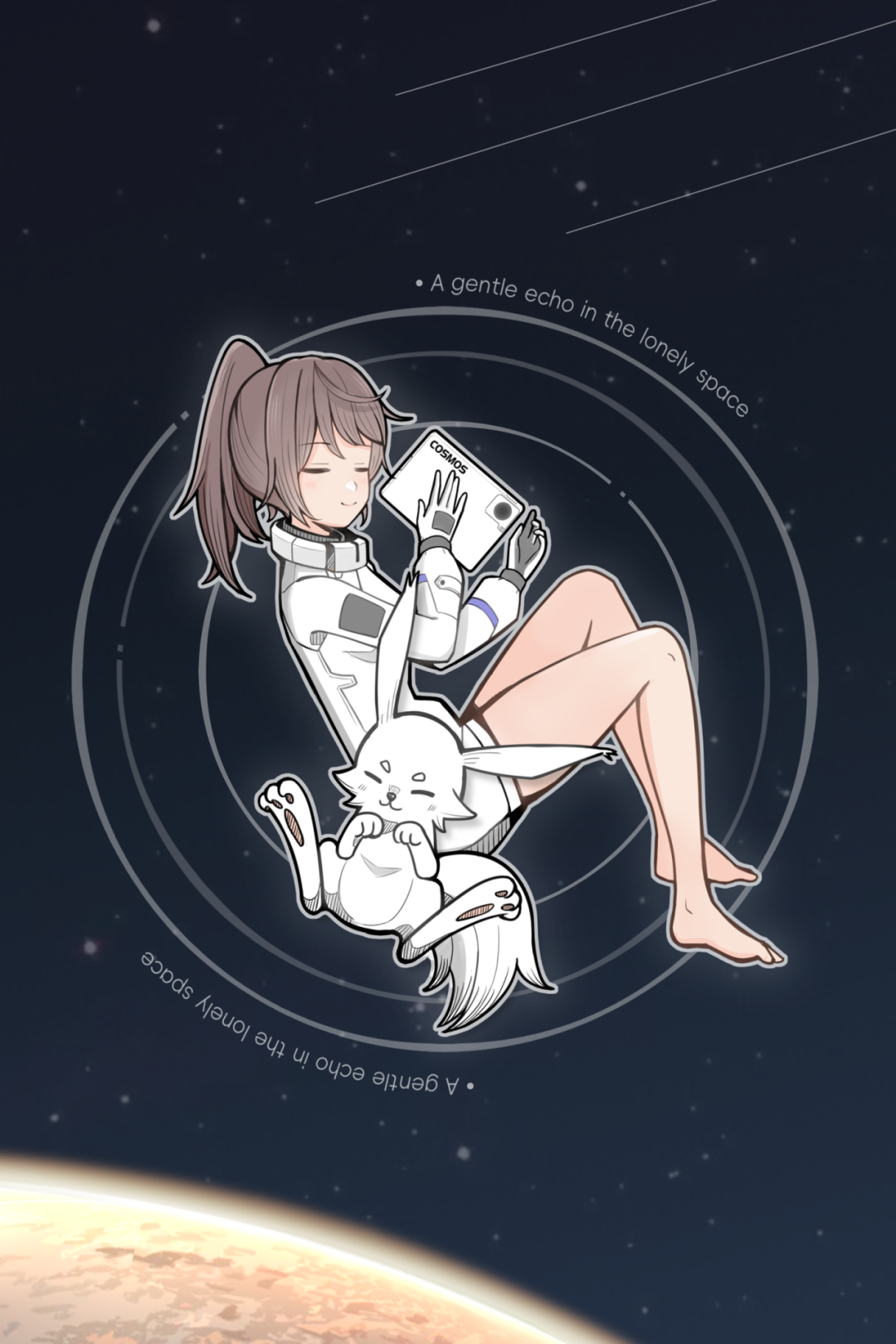
"If we let the player and Aliya physically meet in some way, it would be too clichéd and break immersion—after all, we said it's a meta game set worlds apart, so that would directly contradict the premise. So we thought of many sci-fi approaches, such as: the player somehow living for a thousand years; or the player finding a way to talk to their future self a thousand years from now; or the player passing down the belief 'in 3024, remember to save a girl named Aliya' through generations of descendants; or a sudden improvement in signal allowing them to send frame animations for a brief meeting with Aliya... But none felt particularly good," Wuli said.
Finally, they decided to use the romantic description of light-years and time difference to summarize this more "stream-of-consciousness" meeting. Adding some cosmic-level romance and a science nerd's imagination—the scene of seeing each other across the galaxy—came to life on the page, and it was unanimously approved.
In fact, the initial setting didn't have the distance as 1,000 light-years. That specific number was changed later to fit this meeting scene.
Wuli's mind is filled with this kind of cosmic-level romantic interpretation, including some thoughts on the future form of human civilization. In the game, human civilization a thousand years later is ruled by corporations. Explorers of the stars, while glamorous and admired on the surface, are essentially slaves in the corporations' resource competition. The world of the future has lost the spark of imagination; human rights have become the prey of money; the spirit of exploring the stars has been tainted by profit; the gap between rich and poor has taken on the superficial characteristics of cosmic cyberpunk. Terms like clone, Laika, Doll... mask the cannibalistic nature of society.
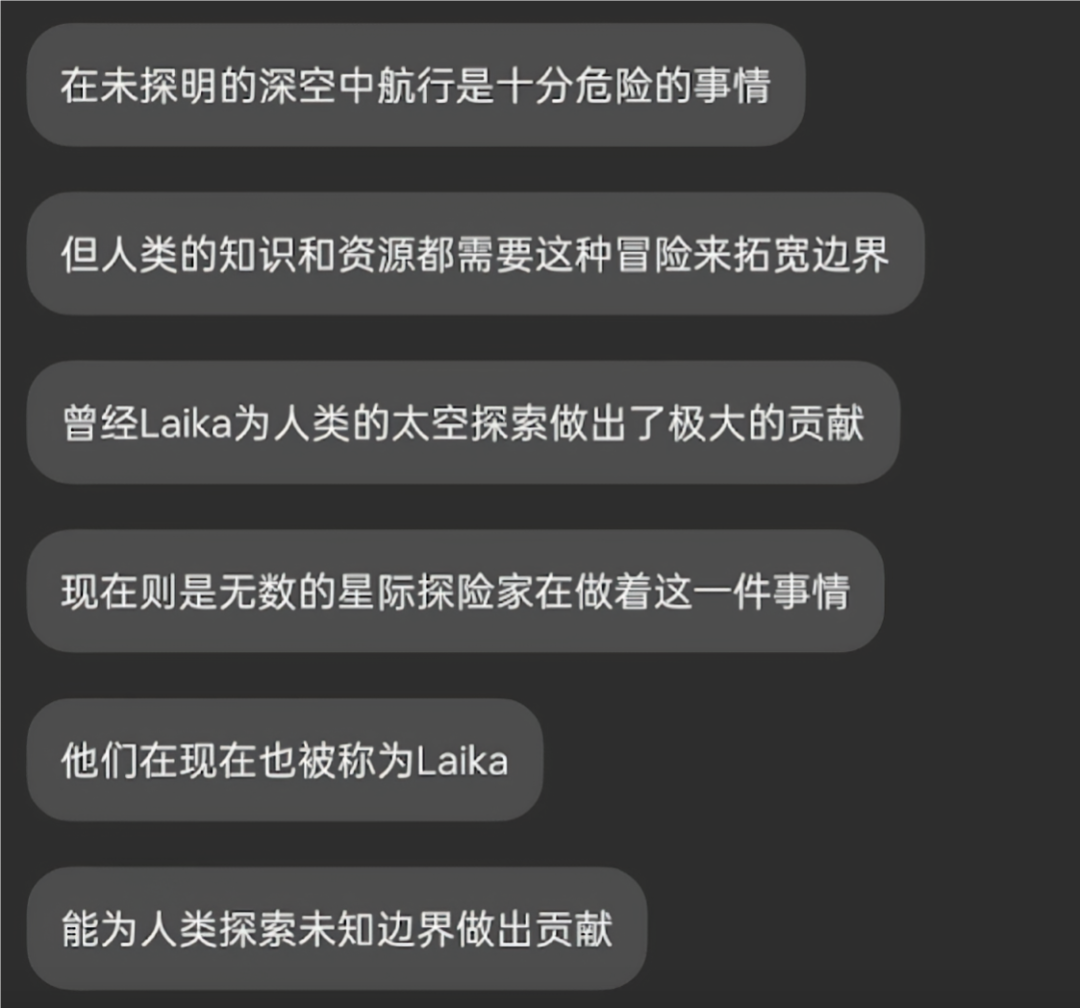
It is precisely in such a hopeless world that seeking some romance and beauty rooted in the human heart, and digging out the long-despised spirit of exploration, becomes a thread of light at the bottom of the gravity well of desire. A thousand years ago, humanity's imagination of the stars, the fearless spirit of the explorer father against the times, and the one and only cosmic adventure born from desire in one's short life—all condensed into the brief chats with you across 1,000 light-years.
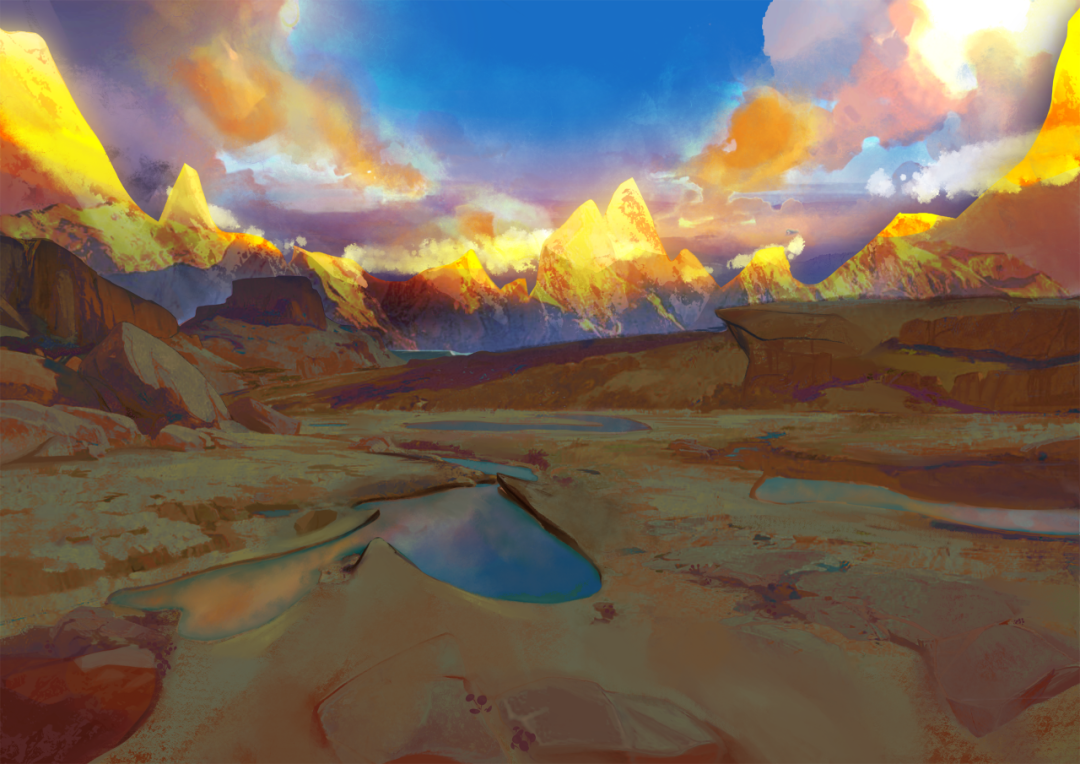
Before her death, Aliya can share with you the environment of Coron 2-C, use her dwindling oxygen to talk excitedly about the textures of new species never seen before, and discuss how the residual glow of a red dwarf shapes golden snow-capped mountains in the sunset created by a star.
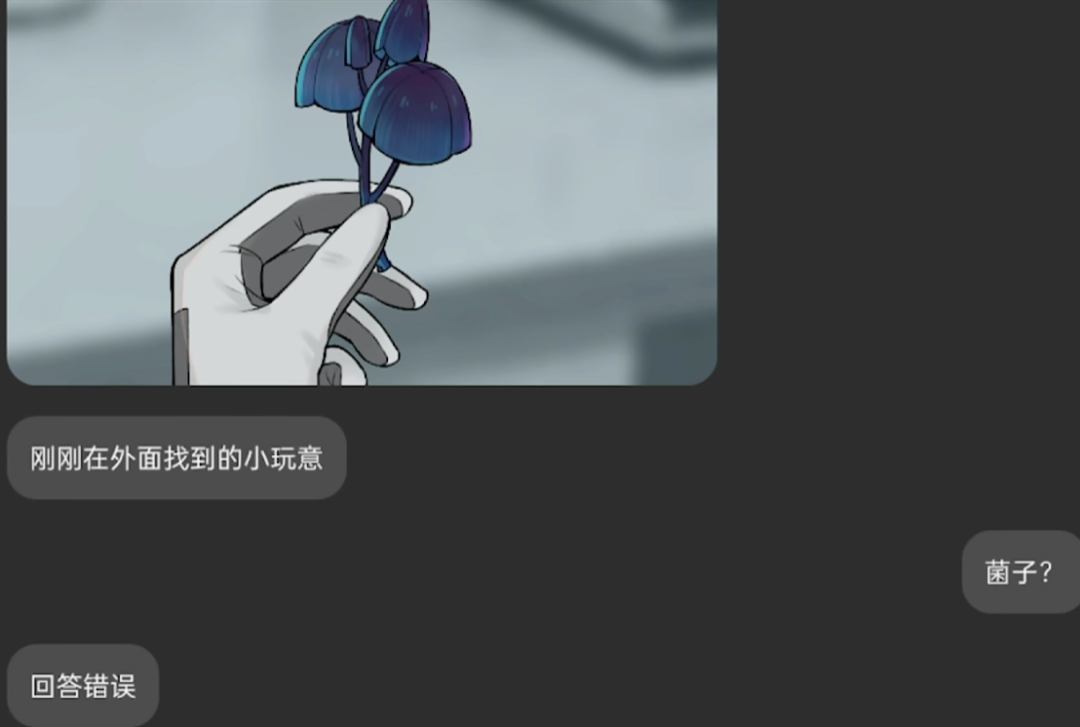

Amid the white noise signal that no one will ever answer, she laughs and says she dances in the afterglow of the Big Bang.
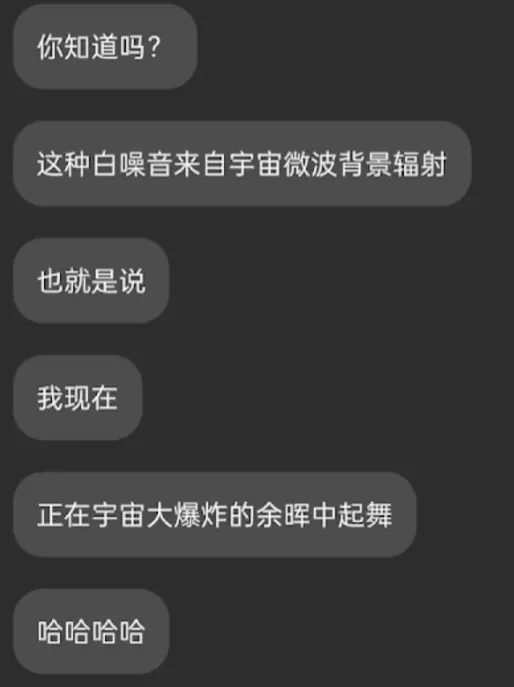
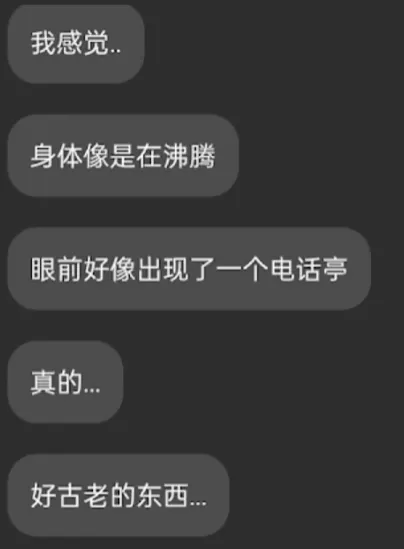
These chaotic, romantic elements across the cosmos—Wuli says their inspirations are diverse. In fact, another ending in the game introduces a device that explains "how the player and Aliya can communicate without delay across 1,000 light-years," called the "Time Mapping Synchronizer," which syncs time differences and spatial gaps (also allowing multiple playthroughs to skip waiting time for speedruns). Under the influence of this device, Aliya sees a phone booth that can dial into the past—and the inspiration for that phone booth comes from the Doctor's TARDIS in Doctor Who.

The ship's main control system, COSMOS, which the player occupies, is inspired by the dog Cosmo from Guardians of the Galaxy, whose prototype is the first dog to go into space—Laika, from the Soviet Union in 1957.
And the word "Laika" in this game becomes a derogatory term for "space explorers." In an era where the spirit of exploration is eroded by corporate interests, "the dog that gave its life for humanity's space exploration" is indeed the most ironic nickname.

Similarly, another concept related to the core mystery appears in the game—"Doll." Dolls are clones implanted with memories, unaware of their identity, lacking human rights, and treated as company assets—disposable items for exploring the edges of the universe. The design of these names also draws from various dolls in Japanese culture, such as the Doll (Firekeeper) from Bloodborne, Ranni from Elden Ring, and the doll aesthetic in Ghost in the Shell...
Wuli's vast and colorful experiences form the foundation for creating such a brilliant story.
4. "All the money from outsourcing went into making the game"
As mentioned earlier, to create 彼方的她-Aliya, everyone at Tongdian Game Studio was constantly taking outsourcing jobs to earn money. Many media outlets have reported on various college student indie game teams, but few describe where the economic support for these teams comes from. Consequently, many people think that "college students" making indie games is all about youth and passion.
But that youth and passion only exist for the minority of teams that have funding, channels, technical skills, and connections.
Steve summed up Tongdian's situation in one sentence: If we don't do outsourcing, we starve.
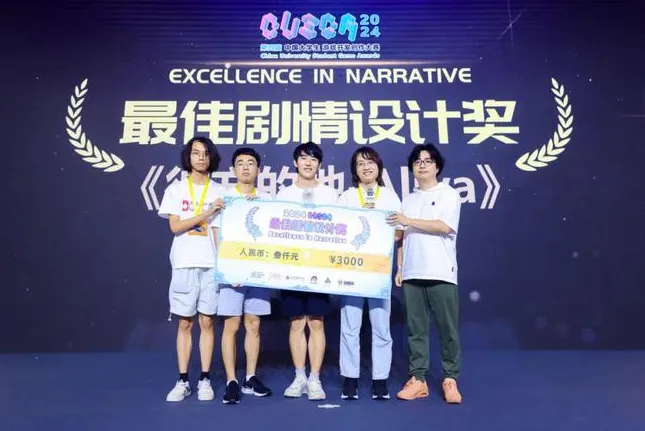
Currently, Tongdian has six full-time core R&D members. They actively participate in various college game development competitions. 彼方的她-Aliya won the Best Story Design Award at the 2024 CUSGA. They also got into the finals of the 2024 Gbit Future Game Creator Competition with their multiplayer party game Bump Party and created a conceptually unique interactive narrative game called Trouble: Send This Letter for the finals.
It's no exaggeration to say that today's achievements were earned with blood, sweat, and tears.
In May 2021, Lilith Games' Avatar project was setting up a university studio. Steve and the team coincidentally got in touch with a Lilith employee and established a game studio at Chengdu University of Information Technology, using it as a foundation to form the team. In May 2022, they rented an office off-campus and officially began pursuing a commercial path. In May 2023, they registered a company and formally started their entrepreneurial journey. By now, the team has been working together for three years.
During these three years, until the release of 彼方的她-Aliya, they had no source of income—they survived purely on outsourcing.

"With a monthly operating cost of ten to twenty thousand yuan, we had to spend a significant amount of manpower on outsourcing just to barely stay afloat. Fixed expenses are there; if we don't earn money, we starve. Moreover, we lack channels. We can only pick up leftovers from others, taking on outsourcing jobs that nobody else wants," Steve admitted frankly.
"As people in business roles know, with the current economic downturn and the worsening investment environment for games, many teams are taking on outsourcing, leading to a market where ten bidders compete for one client. In such an environment, channels are king, connections are everything. Without connections, you have to go through middlemen—but many middlemen take a 40% to 50% cut just for bridging the connection. We still had to handle everything ourselves, scouring various outsourcing group chats for leads and chasing orders. Being heavily skimmed and getting stiffed on payments is common."
The situation Steve described is a microcosm of the ecosystem for most college student teams dedicated to game development but still unknown.
"Even so, we persisted," Steve gritted his teeth.
They often joked among themselves: Wealth and glory go elsewhere; if you fear poverty and death, don't enter this door. Anyone willing to do this line of work is charging in with a burning passion for games.
Despite lacking channels and connections, they've had strokes of luck. For instance, all six talented members of their team, including the music producer for 彼方的她-Aliya, Azure_Lag, were recruited from within their own university.

Normally, it's relatively rare to assemble a fully functional team within a single university. Most teams that participate in game competitions are mixed groups of people from different schools. Moreover, CUIT is a comprehensive science and engineering university; students with strong art skills are scarce. Wuli said they originally thought about visiting nearby Sichuan Fine Arts Institute or Sichuan Conservatory of Music to find talent, but without connections, it was impossible. Fortunately, they lucked out and found suitable art students within their own university—and those two art students are incredibly versatile, capable of handling 2D animation, concept art, motion design, and all other artistic needs.
Wuli noted that for a startup team to create a critically and commercially successful indie game, there's still a degree of luck involved. He even keeps a slip of paper with the words "Game Big Seller" written by a Taoist priest he specially consulted, tucked inside his phone case.

This cute superstitious spirit is also reflected in the naming of their studio.
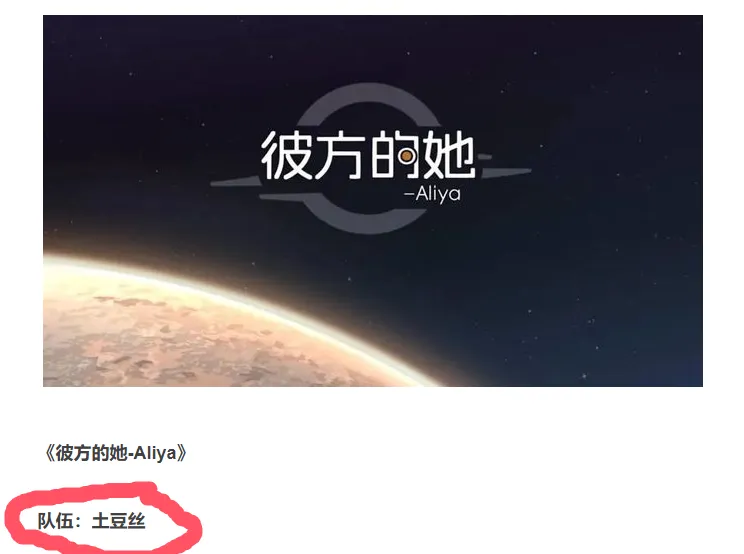
Originally inspired by Steve Jobs, Steve wanted to name the studio "Think Different Studio." But when registering the company, they didn't dare to use that name for fear of being sued by Apple. So they settled on the abbreviation TDS and renamed it "Tudousi" (shredded potatoes). When they participated in CUSGA 2024, they went on stage under the team name "Tudousi"...
"But the company registration bureau wouldn't approve 'Tudousi,' so we decided to choose a more anime-style name, settling on 'Tongdian' (eye electricity). However, we found out that 'Tongdian' was already registered. At that time, we happened to read an article about miHoYo's history, which mentioned that the name miHoYo was inspired by the most successful internet companies from Silicon Valley, all of which had two 'o's in their names. So we decided to follow miHoYo's example and add a 'You' (game) after 'Tongdian,' making our name contain two 'o's as well—good feng shui," Steve added.
"Everyone has their own destiny; fortune is in heaven's hands. For startup teams, especially college students, too many uncertainties affect the ability to create a game that is both well-received and commercially successful. Pursuing these superstitions is also a way to motivate ourselves."
5. Conclusion
As of early August, 彼方的她-Aliya has sold over 7,000 copies. For a small-scale indie game in a niche genre, that's a solid result.
They hit many walls. Originally, they planned to make a Hades-like game, but after six months, they realized it would take them at least three to four years with their current abilities, with no visible progress in sight. At that time, the money earned from outsourcing was being thrown into the bottomless pit, leaving them desperate.
Finally, they decided to abandon that project and change their goal: first, make a small-scale game they could handle to learn the ropes of releasing on Steam.
Steve believes that, whether in the gaming industry or the internet industry, it's crucial for any startup team to get a game (product) out quickly to receive market feedback and validate their design concepts; otherwise, they risk building in a vacuum. So they greenlit 彼方的她-Aliya.
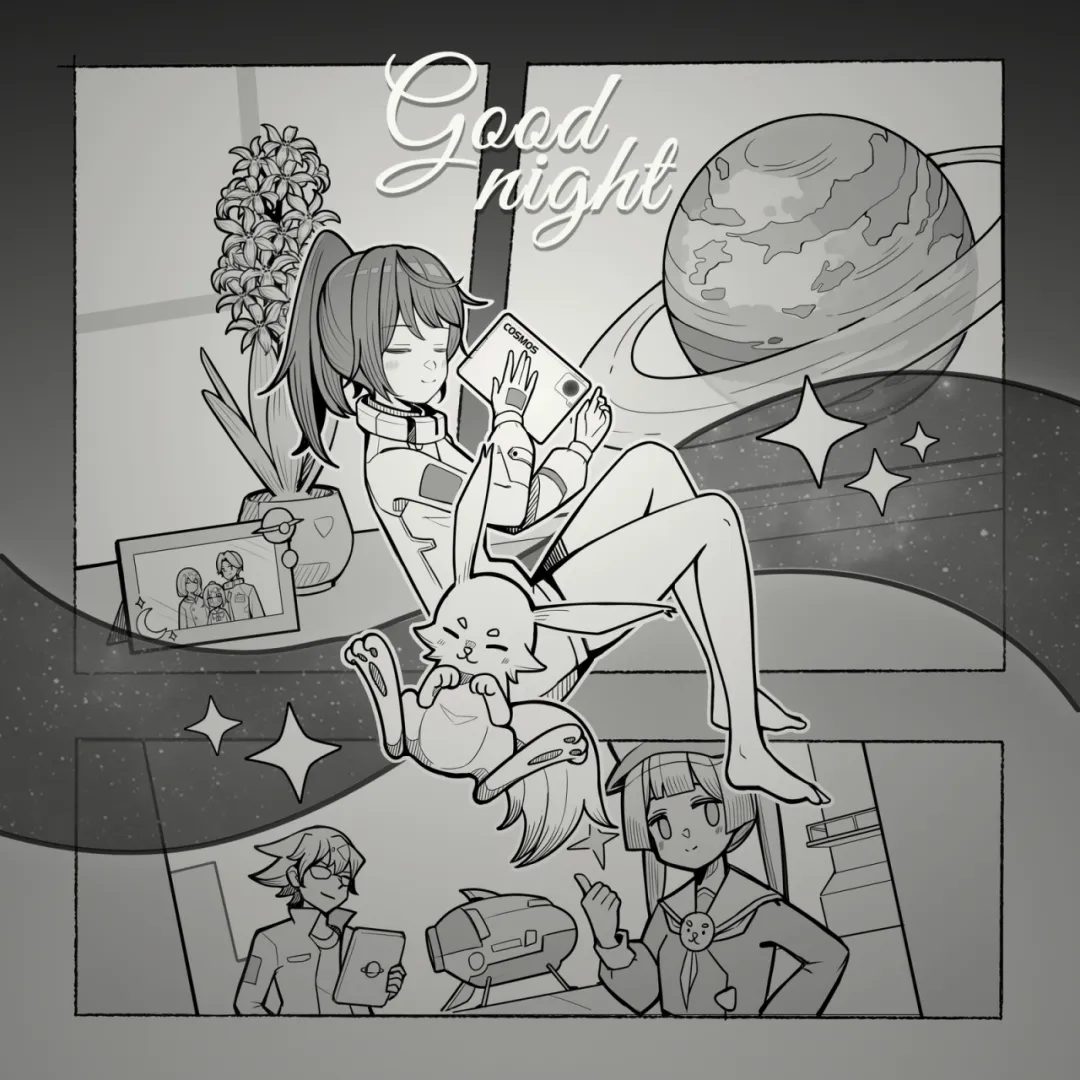
Wuli also shared his experience: one common mistake for indie game developers is to start by aiming too big, pouring large sums of money into a game in hopes of immediate success. After being tormented by the Hades-like project for half a year, the team was exhausted, demoralized, and withdrawn. That's why they needed a small-scale game that could be released quickly to revive the team's confidence—and that's how 彼方的她-Aliya was born. It was messy, humiliating, but effective.
"Fortunately, I started making games from my freshman year. The cost of trial and error in college is low, so I was able to stumble through all the pitfalls during this low-cost period. That's already lucky enough. If I had encountered these pitfalls after graduation, it might have cost me millions. Besides, starting game development as a freshman means by senior year, I can put four years of game development experience on my resume—totally worth it."
Before the game's release, Wuli often fell into self-doubt and overthinking. Knowing that his teammates were giving their all while he was spiraling made him feel guilty and miserable.
Then 彼方的她-Aliya was released, and player reviews were overwhelmingly positive. Only then did his heart settle. Every morning, the first thing he did was open Steam and read player reviews—this became his spiritual pillar, his motivation to make games.
He said this was the moment he felt his efforts weren't wasted, the moment he regretted nothing as an indie game developer.