2 posts tagged with "game"

View all tags

Neutral Monsters Revolt, Fairies Roam: Forest-Themed Innovation in the New Season of Teamfight Tactics

· 15 min read

Author / Hashichai

Edited by < the Reliable Editorial Desk >

In many games, losing to jungle monsters is a little embarrassing. But in the new "Nature's Power" set of Teamfight Tactics, the jungle monsters themselves become units on the board. Facing an opponent with a fully assembled 10-pc Rift Critters trait, you may well find yourself powerless.

On August 20, the "Nature's Power" set went live in Teamfight Tactics. Having been invited to try the test server ahead of launch and to talk with the set's design team, I felt this could be one of the most distinctive sets yet.

Forest Magic of Light and Dark

The visual theme of "Nature's Power" is an enchanted forest of strange flowers and beasts. The forest tale can be heartwarming or dark, and both sides are expressed through unit abilities, trait effects, and board interactions.

Starting with trait characteristics, nearly every trait in the new set ties into the forest theme.

For example, the "Eternal Woods" trait is like summoning a Stoneplate Tree and Blooming Flower to fight for you in the forest; LeBlanc, in her green dress, has a chance to copy units on the board. The "Flower Fairy" trait summons flowers and butterflies around your units, providing attack and spell power bonuses plus healing.

(素材源于测试服,请以正式服上线版本为准)

"Blackthorn" sounds much more like dark magic — its trait effect sacrifices units to buff other allies.

(素材源于测试服,请以正式服上线版本为准)

The "Yordle" trait activates a "Furry Big Friend" to fight alongside you at just 3 units. Yordles ride on the Furry Big Friend, with backline units gaining damage and frontline units gaining resistances.

(素材源于测试服,请以正式服上线版本为准)

The "Rift Critters" trait mentioned at the start is more like a "jungle monsters rise up" narrative set in the forest theme. Normally, jungle monsters have little presence on Summoner's Rift — apart from the Red and Blue buffs and the Elder Dragon being remembered for their buffs, the fate of ordinary camps like Murk Wolves and Rift Scuttlers is to be farmed for gold.

But what if the monsters could grow? Under the theme of "Nature's Power," the jungle monsters have sounded the horn of counterattack.

On the TFT board, the monsters keep their looks while their attack forms have been adapted — for example, the Blue Sentinel Golem attacks with a charge, while the Blue Sentinel fires a blue magical laser. With items equipped and buffs applied, even the little critters can pack some punch.

(素材源于测试服,请以正式服上线版本为准)

The strength of the Rift Critters trait is that with at least 3 critters you gain an "Alpha Sigil" that buffs one chosen critter — put it on the Blue Sentinel, for instance, and it gains a "blue buff"-like mana regeneration effect.

(素材源于测试服,请以正式服上线版本为准)

Put it on the Red Brambleback, and this ranged unit gains a "red buff" that boosts its attack power.

(素材源于测试服,请以正式服上线版本为准)

Fighting as a group is another hallmark of the critter trait. As a large trait, at 5 critters, every third shop refresh is all critter units.

(素材源于测试服,请以正式服上线版本为准)

Seeing the shop full of monsters makes completing the trait feel amazing, and the 10-critter trait grants +2 unit slots. The 5-cost Elder Dragon is both tanky and has an execute ability, which is why it takes up 2 slots — with other traits, players often have to give up some board units for it. But with the 10-critter trait, bringing in the Elder Dragon feels effortless. Anyone who sees that board would call it a "victory for the monsters."

(素材源于测试服,请以正式服上线版本为准)

As for individual units, Riot Games Lead Game Designer Matthew Wittrock says the most representative unit of this set is undoubtedly Ivern. As a 5-cost, Ivern generates special-tile groves on the board. If Ivern comes out early enough, you can watch him plant groves across the entire board, unlocking qualitative buffs — enlarging units on the board, boosting their stats, even copying them as they fight.

(素材源于测试服,请以正式服上线版本为准)

I think Grand Elementalist Lux is the most special unit of "Nature's Power." This set, her trait quirk is "traits count double," making her great for rounding out traits. Rolling for Lux isn't hard — the hard part is finding, at stage 9 or 10, a Lux that activates the traits in your hand, and deciding whether to invest in her.

(素材源于测试服,请以正式服上线版本为准)

Beyond the above, the two most interesting traits I experienced were "Nemeses" and "Spirit Blossom."

"Nemeses" incorporates the "Hunt" easter egg from Summoner's Rift, where Kha'Zix and Rengar duel each other. In TFT, Rengar is an early-game unit, gaining gold every 8 takedowns; Kha'Zix scales late, gradually unlocking four traits including "Executioner" and "Sorcerer" as his takedowns stack.

(素材源于测试服,请以正式服上线版本为准)

But the "Nemeses" trait restricts players to choosing either Kha'Zix or Rengar to trigger their respective "stack on takedown" rewards — unless you grab the "Historic Reconciliation" augment, which lets both Kha'Zix and Rengar trigger their stacking rewards at once, and grant each other mana and healing buffs. It's an augment you'll definitely want to try once you get it.

(素材源于测试服,请以正式服上线版本为准)

Matthew Wittrock shared that the design intent behind this trait was for the "stack on takedown" mechanic to let players feel the flow of an assassin growing stronger as takedowns stack. They also hoped to recreate what happens on Summoner's Rift: two players as nemeses, one playing Rengar, the other Kha'Zix — while making two units sharing the same "stack via takedowns" mechanic produce different experiences.

In actual play, I haven't yet encountered a match where one player ran Rengar and another Kha'Zix, but even without "Historic Reconciliation," investing in either unit is quite fun, and they can be paired with different emblems like "Flower Fairy" or "Blackthorn" for surprising results.

The “Nature Sprites” mechanic that raises your ceiling

The core mechanic of the "Nature's Power" set is "Nature Sprites": every other shop refresh, purchasable buffs appear to the right of the shop. Inspired by the "random staves" mechanic of the "Magic n' Mayhem" set, there are over 200 different effects.

Think of them as an all-new version of the staves. Riot Games Senior Game Designer Tim Jiang believes players found the old "random staves" relatively bland because once you got a staff, it rarely changed your overall strategy.

The design intent behind "Nature Sprites" is to make the change easy to perceive by tying into your comp's traits, while in terms of power balancing both qualitative leaps and smooth transitions for your comp — ideally enough to influence the state of the game and your current strategy, while remaining approachable for new players.

Normally, which comp you play in a match depends on the units, items, and augments offered, especially in the early game. From my offline and test-server experience, "Nature Sprites" feel like augments that appear more frequently, yet combine game-changing power with smooth transitions.

"Nature Sprites" come in many types. Some grant XP, refreshes, or items as supplements — these basic ones are generally great value. Others are bounty-style: win the next round for an item forge; win several rounds in a row for XP, refreshes, items, and so on — you have to choose based on your comp's current strength and strategy.

(素材源于测试服,请以正式服上线版本为准)

There are also sacrifice-type sprites: lose some Little Legend health in exchange for a unit duplicator or some refreshes — very useful for comps that need to roll for their core units in the early-mid game.

There are also lots of fun utility types, like "Abandon Ship," which gives you a full reshuffle to re-pick your board, and "Armistice," which offers both players 1 gold each with no health loss.

(素材源于测试服,请以正式服上线版本为准)

Powerful "Nature Sprites" can also bring a degree of qualitative change, early or late. For example, "randomly get a 4-cost unit" is a wonderfully simple gamble — in one game I got the must-contest 4-cost Ahri, and I could then build my comp entirely around her.

(素材源于测试服,请以正式服上线版本为准)

In another game at stage 2-3, a 1-gold "Nature Sprite" randomly offered a 4-cost hero, and gave me Amumu — the 4-cost tank who was very strong during testing — which fit my Inferno + Eclipse comp perfectly.

(素材源于测试服,请以正式服上线版本为准)

The most thrilling "Nature Sprite" is the mid-to-late "Grand Metamorphosis," which permanently transforms a 4-cost unit into a 5-cost — the result can directly change your comp's strength.

(素材源于测试服,请以正式服上线版本为准)

Some "Nature Sprites" also serve traits: if you're running the Nemeses trait with Kha'Zix or Rengar, what you need most is to hit 3-star fast, and a specific sprite will directly give you a Kha'Zix or Rengar with 3 takedowns already stacked.

Overall, "Nature Sprites" are very rich in type — there are no-brainer resource types that help you transition through the early game, and riskier types with variable payoffs, easy to pick up yet capable of delightful leaps in power.

Most of the time, a single "Nature Sprite" felt weaker in impact than augments or the Carousel — but through higher frequency, richer variety, and some randomness, it introduces one change among your current units, items, traits, and other elements, giving you a reference point in comp building without overshadowing your own decisions.

Used well, it can raise your ceiling in a match and synergize with augments and your comp.

For example, "Barter" sells one of your units that round for 250% of its gold value — on its face, you sell a 5-cost and get 12.5 gold. But some uploaders discovered that combining it with "Wanderer's Ally" or "Worth the Wait" lets you quickly hit 3-star or even 4-star low-cost units; when "Barter" comes up, you sell them for the equivalent of 30–40 extra gold.

Then use that extra gold to push a 4-cost to 3-star, and when "Greater Metamorphosis" appears (permanently transforming a 4-cost into a 5-cost), you land a 3-star 5-cost. This staff combo punch on the board is so good that anyone watching would want to pay for an account just to try it.

The "Spirit Blossom" trait, the big trait tied to the "Nature Sprites" mechanic, unlocks another dimension of the ceiling.

At 3 Spirit Blossom units, "Nature Sprites" upgrade — the sprites offered are discounted or upgraded in power. At 5 Blossom, a "Nature Sprite" always appears in the shop. At 7 Blossom, you gain 4 gold for every "Nature Sprite" purchased — once unlocked, you can buy power-boosting "Nature Sprites" every round and even profit gold from buying them. Pair it with the augment "Sprite's Reward," which grants 2 gold each time you buy a "Nature Sprite," and you can literally play this trait like a roguelike.

(素材源于测试服,请以正式服上线版本为准)

Spirit Blossom's strength depends on the quality of your 3-cost and 4-cost units. Running multiple Blossoms alongside "Nature Sprites" makes it easier to hold your economy — but how many Blossoms to run, which "Nature Sprites" to take, whether to push Blossoms early or late, whether to shore up Blossom strength or chase other 4-costs and 5-costs — those all demand more thought.

Distinctive Innovation

As a live-service game, Teamfight Tactics needs innovation every set — that's what players expect. From last set's "Starborn" to this set's "Nature's Power," Teamfight Tactics has shown two models of innovation.

If "Starborn" removing the Carousel was the more overtly visible change, then "Nature's Power" looks at a glance full of "refreshes": the "Nature Sprites" mechanic draws inspiration from "Magic n' Mayhem"'s "random staves," and the theme of "Nature's Power" takes its cue from the "Rise of the Elements" set.

As Teamfight Tactics passes its five-year mark, its mechanics have gradually grown more complex. After experiencing this "Nature's Power" set, I felt that although some elements seem familiar at first glance, the fun of playing it feels completely different.

My direct impression is that "Nature Sprites" raise the ceiling of both experience and decision-making — especially after hitting level 9, when you're trying to secure the right 4-costs and 5-costs while also tracking sprite refreshes. Of course, there are also comps like "10 Rift Critters" or "Eclipse Angel" that are simply strong once completed.

(素材源于测试服,请以正式服上线版本为准)

If I had to distill the hallmarks of "Nature's Power," I'd immediately name the strong carries like Ivern, Master Yi, and Fiddlesticks, and just as quickly recall the fun comps like Flower Fairy Rengar, Blackthorn Ahri, and the fast-9 Dragon Draven. For many players, what distinguishes whether a set succeeds is simply whether it has enough identity.

"Nature's Power" may not be the greatest set ever, but from my experience, with art and mechanics so deeply fused, compared with past sets, this one delivers a truly distinctive innovation.
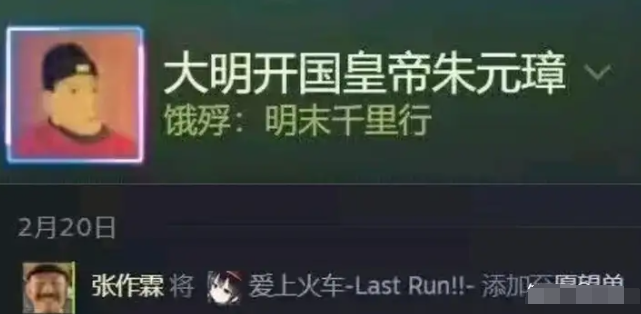
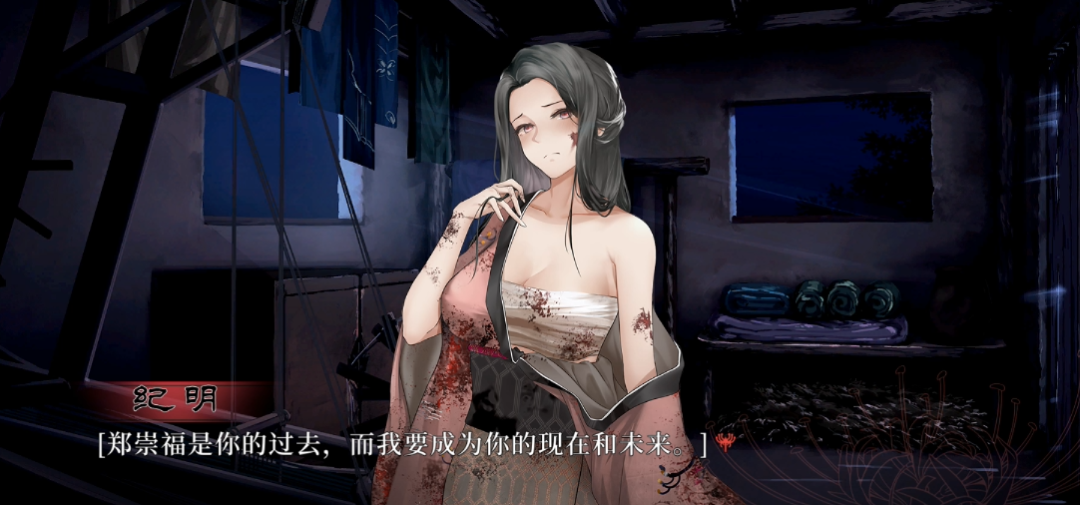
Officer, it's him, after dating a thousand-year-old female ghost, he corrupted underage girls in the late Ming Dynasty.

· 13 min read

This article is reproduced with permission from Qingbao Ji (Geek Intelligence Agency).

Text by: Chun Ci

Approved by: Cai Bao

Layout by: Lu Jiu

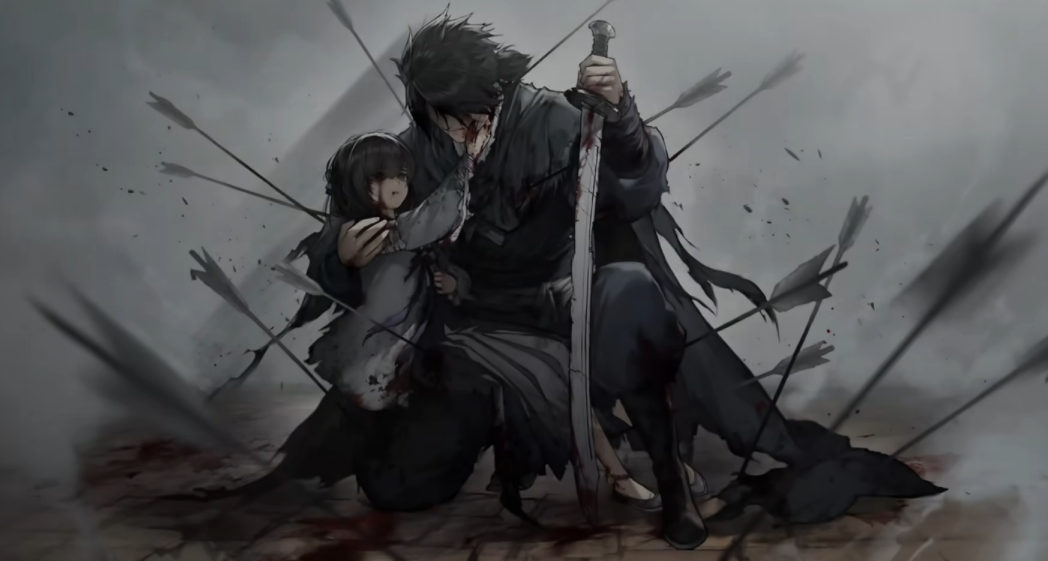
Good evening, everyone who clicked on this article and its cover.

As you can see.

Today’s topic is The Hungry Lamb: Traveling in the Late Ming Dynasty. The article contains spoilers; cautious readers should take note.

Regular viewers familiar with Qingbao Ji should know.

We once had an in-depth conversation with Ji Ling, the creator of Hungry Lamb, during our previous talk about Burying Flowers: The Dark Peach Blossom Spring.

Yes, it was that in-depth XP talk from the end of October 2021.

I like married women, and he likes long black hair, plus that "one hand fits perfectly" bit...

After finishing Hungry Lamb, I decided I had to gank him again at some point.

On a certain afternoon mid-month, when the roads and people were practically baking in the heat.

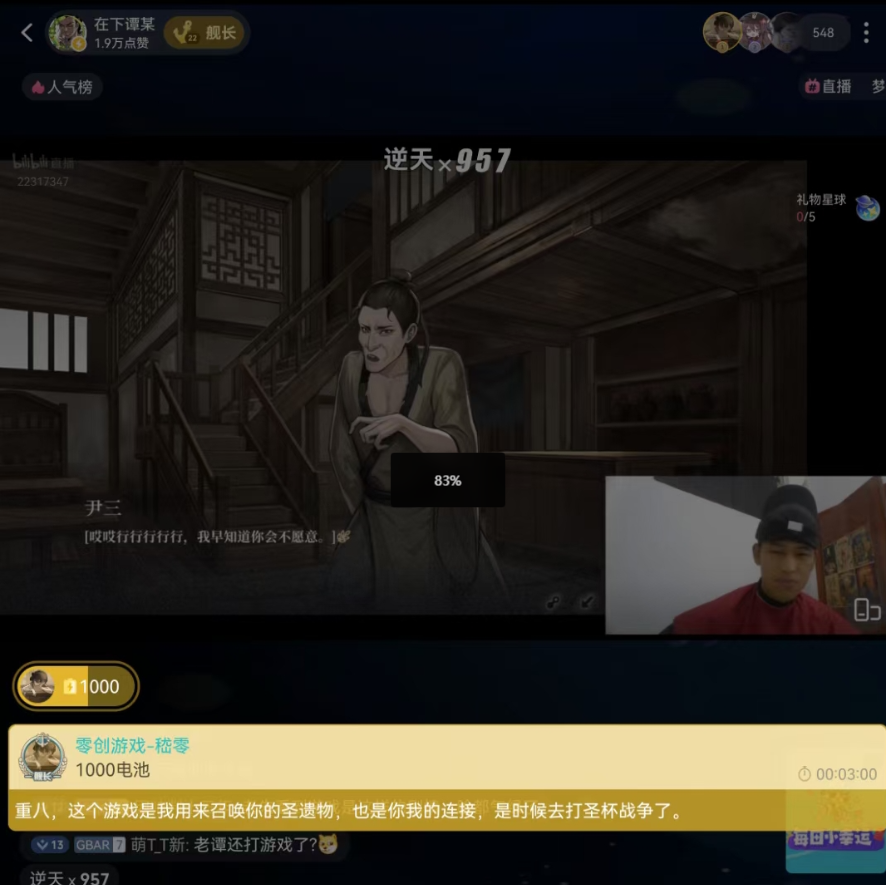
I finally met up again with Ji Ling and his faithful team at Zero Creation Games’ office.

When I saw his office banner had changed from the female lead Shuang Hua of Burying Flowers: The Dark Peach Blossom Spring to Sui from The Hungry Lamb: Traveling in the Late Ming Dynasty,

I knew this guy hadn’t changed.

That familiar "one hand fits perfectly," that familiar fresh-faced girl look, that familiar long hair...

Not only that, the familiar tendency to mess with the players had also returned.

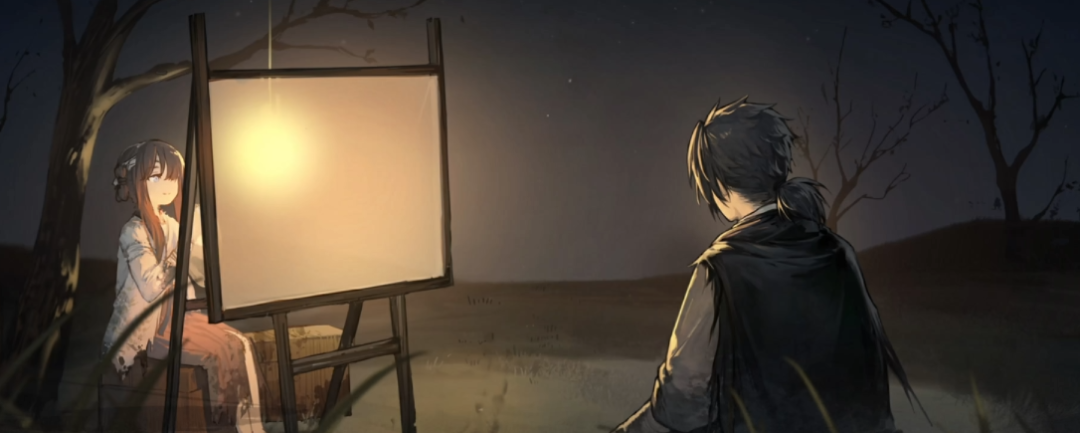
The most poignant part of Burying Flowers: The Dark Peach Blossom Spring was the choice between eternal companionship and mutual death among its multiple endings.

Either stay in the eternal day or eternal night, living forever in the Peach Blossom Spring amidst lies and truth, or escape together and live for just seven days in the outside world before dying together.

This choice of life and death together is even harsher in Hungry Lamb.

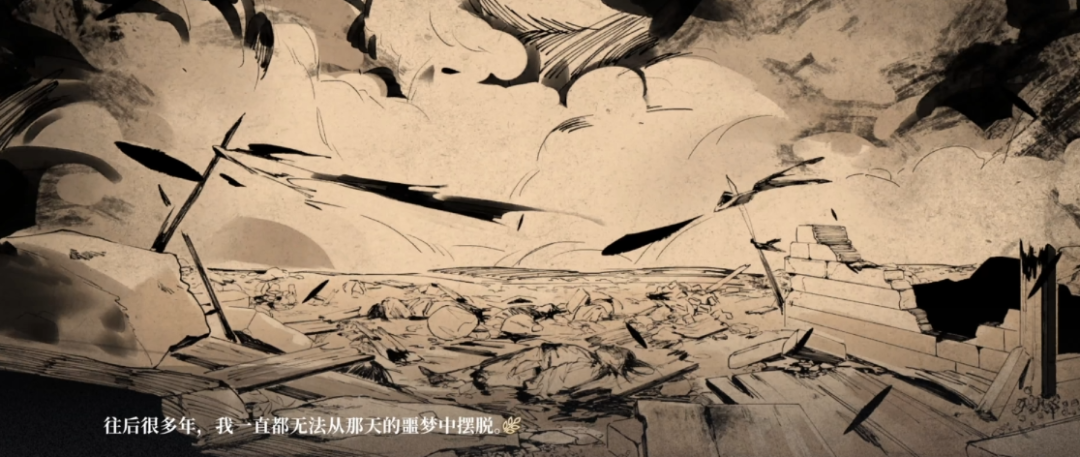
In the true ending of Hungry Lamb, where they live together and flee to Yangzhou, they then face the Ten Days of Yangzhou. (A brutal massacre carried out by Qing troops against the defending soldiers and civilians of Yangzhou during the transition from Ming to Qing.)

As expected of you, your mental state is really something else.

Anyway, our meeting this time was very pleasant.

But since the setting of Hungry Lamb is the cruel era of the late Ming Dynasty, a time of "great famine and cannibalism," discussing XP is a bit too much.

So, what we talked about this time was serious creative work.

So then.

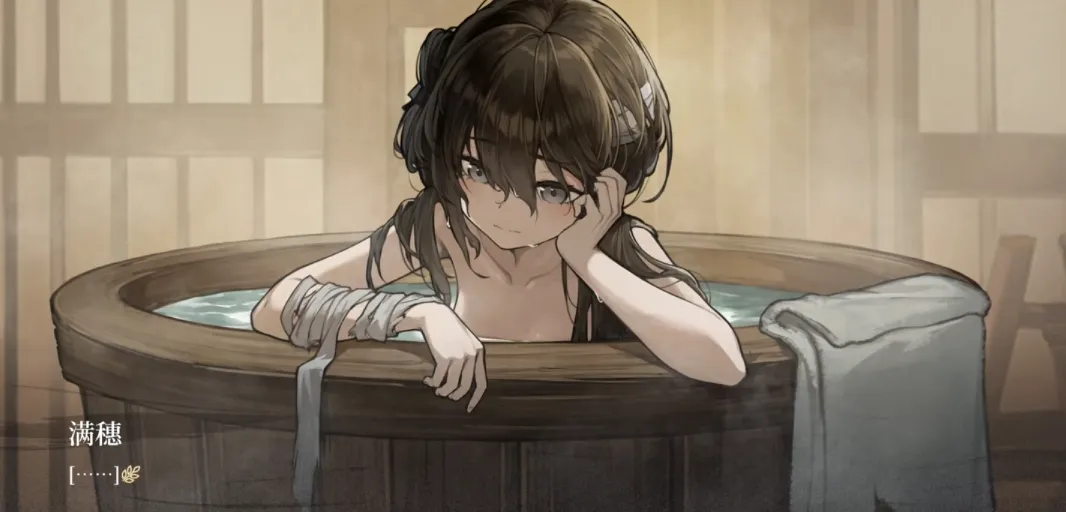
"Why did you draw the scene CG of Sui taking a bath, knowing you might be criticized for child erotica? Are you really trying to pull off that 'raising a young girl' trope?"

I promise I only got cheeky that one time.

Because anyone who actually finished the story's ending couldn't possibly ask such a terrible question.

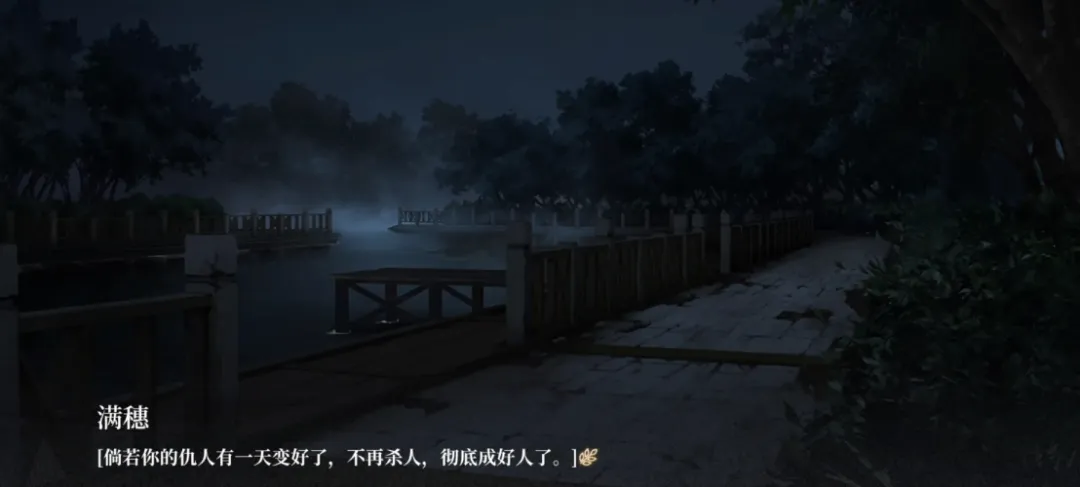
Actually, the reason for this scene is very simple: after walking for over ten days on mountain roads, these little girls were starting to stink, so they were thrown into the bathhouse for a wash.

The protagonist Liang, as a human trafficker, couldn't let them run off, so he just watched them bathe.

There's even a scene later where they bathe together.

The bathing-together scene is even more intense. It happens after Liang betrays his companion, kills the fellow trafficker "Tongue."

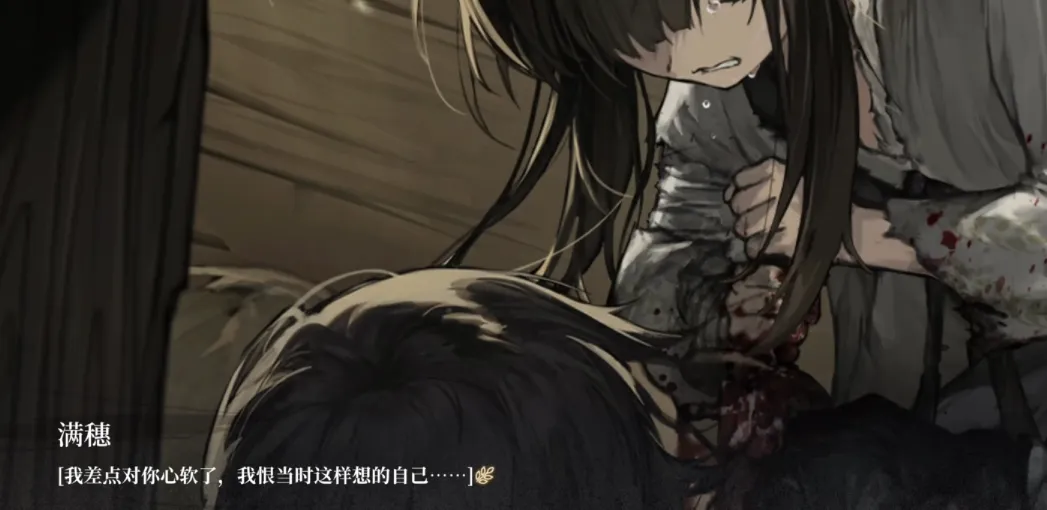
Sui witnesses Liang personally cutting Tongue into pieces in the bathhouse, and then the two of them use the hot water to clean up the corpse and blood. After finishing, they hastily wash themselves together.

This part of the story is quite important.

It's a significant turning point.

And to make the subsequent narrative coherent, I must first give you all a deep analysis of Hungry Lamb.

Liang's character is depicted with a lot of wavering and confusion throughout the story.

This includes his self-comfort ritual of picking up keepsakes from the deceased to give himself a bottom line, as well as his principles for not being a trafficker.

Later, we learn that his main reason for not wanting to be a human trafficker involved in smuggling children is the PTSD from his father's death back then.

In a way, Liang's spirit was frozen on the day he lost his father, while his body grew older with time.

Although Liang himself thinks his inner confusion is about whether to be a wolf or a chivalrous hero.

In reality, Liang has been avoiding recalling the moment his father left him, which was when the two of them went to see a shadow puppet show together.

This mirrors Sui; the driving force behind Sui's desire for revenge also stems from her father's death.

The difference is that Liang was forced to become a wolf by the old times.

However, Sui, who also experienced the loss of her father but faced an even crueler reality, remained strong-willed and desperately fought her way onto the path of revenge on her own.

When we talked about this, Ji Ling mentioned a point to me: "For Liang, Sui is very attractive because she is extremely determined and rational, clever in her actions but with strong principles."

Indeed, a lost person is always curious about why others can be so determined and will search for that reason.

But that reason happens to be fatal for Liang.

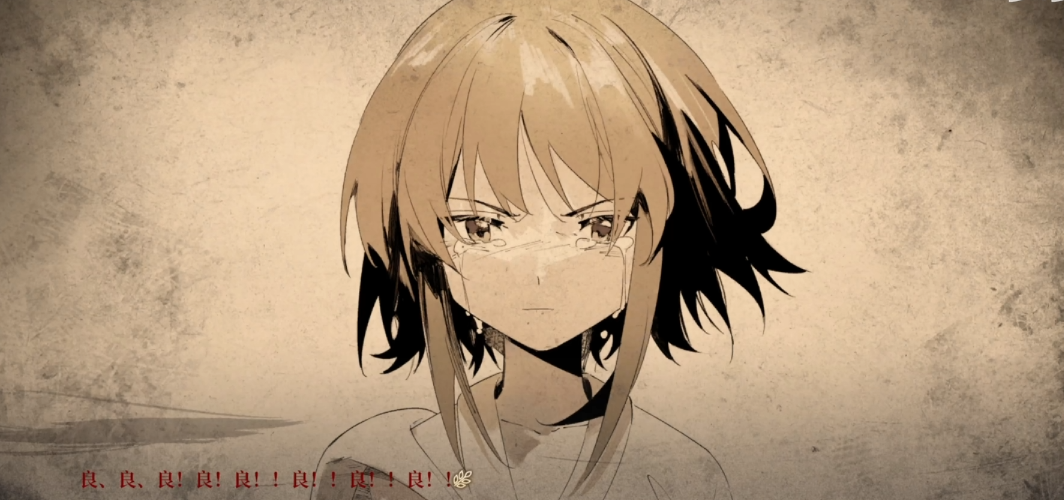
Because Liang personally killed Sui's father.

"Liang wavered, and Sui realized this too," Ji Ling explained.

Right at the start of the journey, Sui had hidden a knife and tried to ambush Liang, but Liang chose not to kill her.

"She also needed to confirm whether it was truly Liang who killed her father, or maybe Tongue, or the escaped soldiers, or bandits, or perhaps she found it on a corpse. Sui is still quite kind."

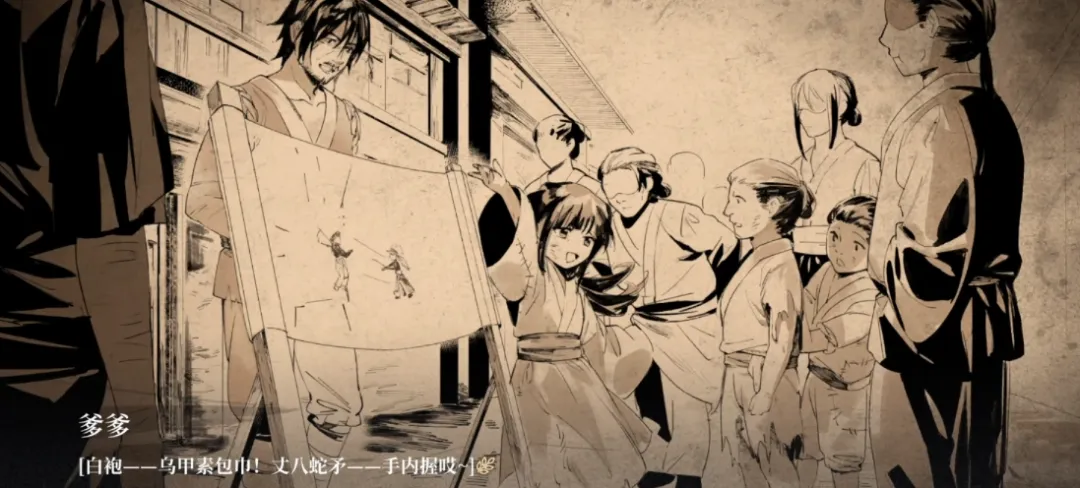
Sui tested him many times, during the bath scene being one, but the main test was regarding the [shadow puppetry].

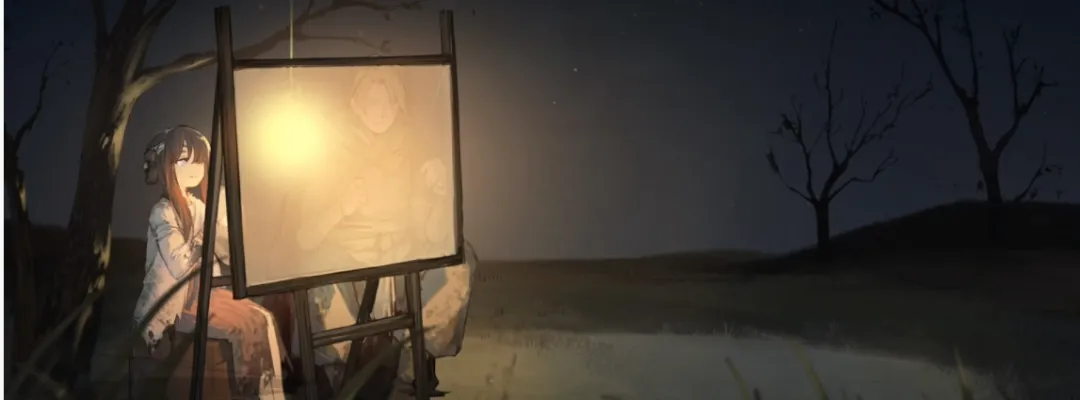
Shadow puppetry is an important motif that runs throughout Hungry Lamb.

As mentioned above, both Liang and Sui were audiences of shadow puppetry in their childhood, and the event of losing their fathers is related to it.

Having grown up, they are now the lead actors in the drama of this cruel era.

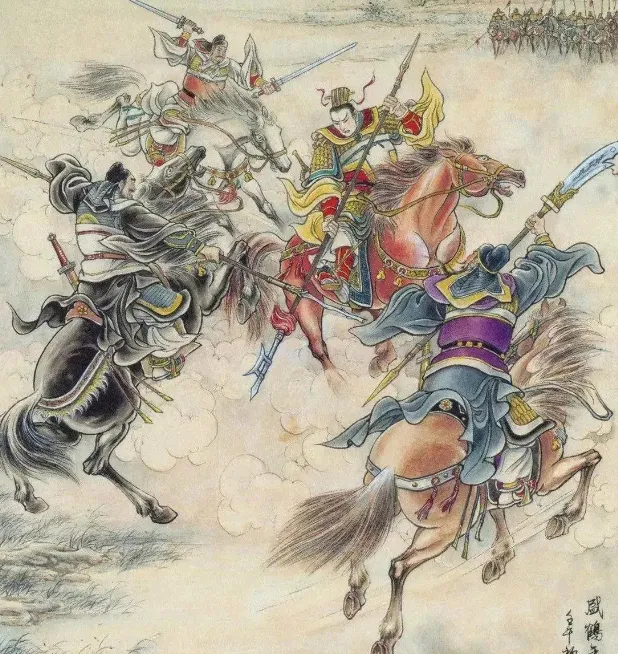
And the chosen play, Three Heroes vs. Lü Bu, both embodies Liang's wish to become a chivalrous hero and subtly implies that under the crushing wheels of this brutal era, whether it’s a powerful wolf like Lü Bu, or chivalrous heroes like the Three Heroes (Sui), neither comes to a good end.

This is just my personal interpretation. When Ji Ling and I talked about this, his thoughts were more direct.

"Any kind of emotion has to start with contact, whether it's love or anything else. There needs to be at least a common ground or resonance."

Therefore, Sui witnessing Liang kill "Tongue" is a very important turning point.

Because the two of them dispose of the body together, bathe and see each other openly starting from here, the issue Sui contemplates changes.

It's both a physical act of baring oneself and a spiritual act of honest self-questioning.

By then, Liang had already found his answer.

He was beginning to turn back from the path of the wolf.

So from this point on, the one who wavered was no longer Liang, but Sui.

And this is where the story of Hungry Lamb truly penetrates the reader's heart. It is indeed the old trope of mutual redemption.

But the redemption in Hungry Lamb isn't the assembly-line type found in fast-consumption fiction, where one simply lends a hand when the sufferer is sad, and redemption is complete.

The redemption in Hungry Lamb is built upon making choices.

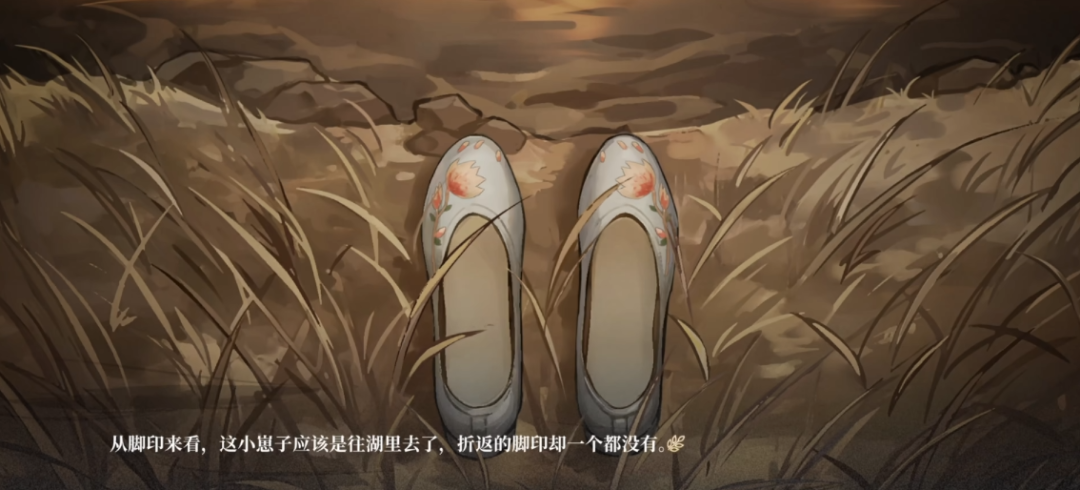
Why does the first ending, [Vanished], have such a lingering impact?

Because this decision was made by Sui.

We can all feel that deep down Sui is beginning to rely on Liang, yet she still chooses to leave.

It is both reality's punishment on Liang, the avenger of her father; Liang finally no longer has to be confused, finally welcoming an ending that can tear apart all his uncertainties.

It is also Sui's final decision to stay true to her original heart, choosing the beauty of the rift: "If you can't help each other in hardship, then forget each other in the world."

Many people might be full of sympathy for Sui's experiences, because her entire childhood was spent suffering.

Unable to get enough to eat, her beloved cat was eaten, verbally abused while performing shadow puppetry with her father, her mother favoring males over females, and finally her whole family going mad, resorting to cannibalism...

But sympathy can make people unconsciously ignore what this sufferer truly thinks.

Sui has a central question that runs through her life.

Before becoming an avenger who raises her blade against the enemy, she devoured her own flesh and blood to survive, and they were all people deeply loved by her father.

How could she ever face her father?

Her father is dead, and by avenging him, she might have a sliver of dignity to face him.

But Liang's transformation stripped that away.

Ji Ling said, "Both Liang and Sui carry some form of original sin; that's the foundation of their empathy."

He also mentioned he didn't want to write about simple romantic love between a man and a woman; he wanted to use the highest form of love.

I remember after Burying Flowers, Ji Ling wrote a letter to the readers titled "Thank You for Letting Me Die Without Regret." Indeed, for this person, romantic love was already there.

As for the highest form of love, whether Hungry Lamb has achieved it, I think everyone who has ever been loved will have a different answer.

But one thing I am certain of.

Regarding redemption, the mutual redemption in Hungry Lamb is not a lofty light, but a flickering flame in the darkness. Getting too close will burn the other.

Only by enduring each other's burns can one see themselves clearly reflected in the firelight.

This is what I find most precious about the work The Hungry Lamb.

Having talked this far, I think you all can see that the so-called "child erotica" is just another old-fashioned moral accusation.

We don't want to delve into the issue of morality either. After all, Hungry Lamb's strength lies in its restraint where needed, its expression where needed, and its rich emotional connections between characters.

Let's skip that.

So, onto the second question.

"What's it like being hunted down by Ming Dynasty fans?"

Ji Ling answered: "Besides Ming Dynasty fans, I've also had six different hats thrown at me by six different groups, including radical feminists, male chauvinists, and national galgame connoisseurs."

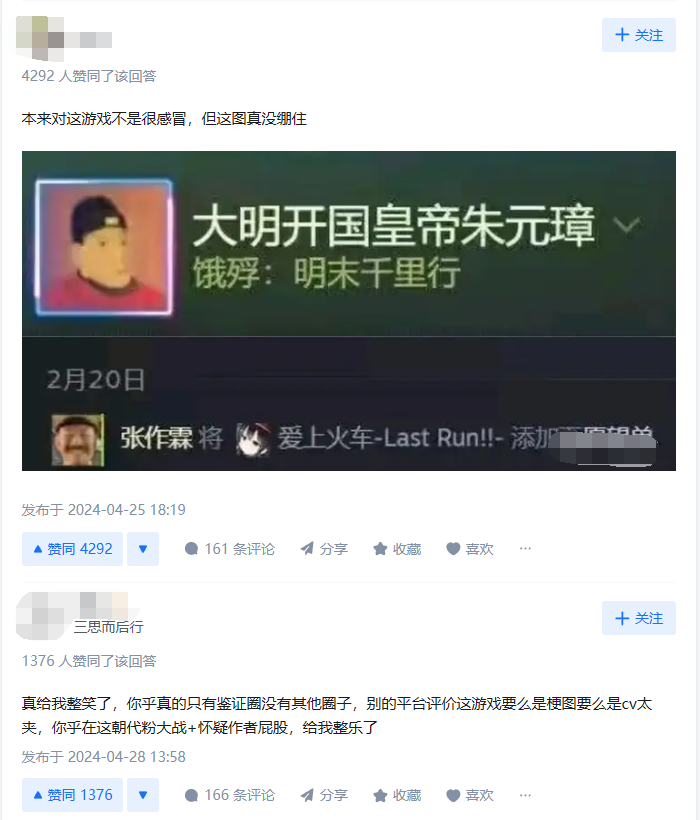
"But I respect the Ming Dynasty fans the most. Their promotion for Hungry Lamb was the MVP. They drove up the traffic for me on all platforms, and then they didn't even go to STEAM to give me bad reviews..."

Ji Ling thought for a moment and summed it up in one sentence.

He chuckled.

"Sometimes haters are really handy, you know? They're most active on Zhihu..."

"All the comments on other social platforms are about the emotions, the characters, the plot. Only on Zhihu it's different."

"They're discussing politics."

After hearing this, I couldn't hold it in either, and the office was filled with a cheerful atmosphere.

So, the third question.

"One of the STEAM reviews said that HANSER's voice acting in the early part felt so full of energy it could punch a hole through this useless college student. Ji Ling, what do you say?"

"Actually, this one's my fault." Ji Ling admitted to taking the blame. "For the first part, we conveyed that the dubbing should have a bit of a playful, relaxed atmosphere, and it ended up sounding like that."

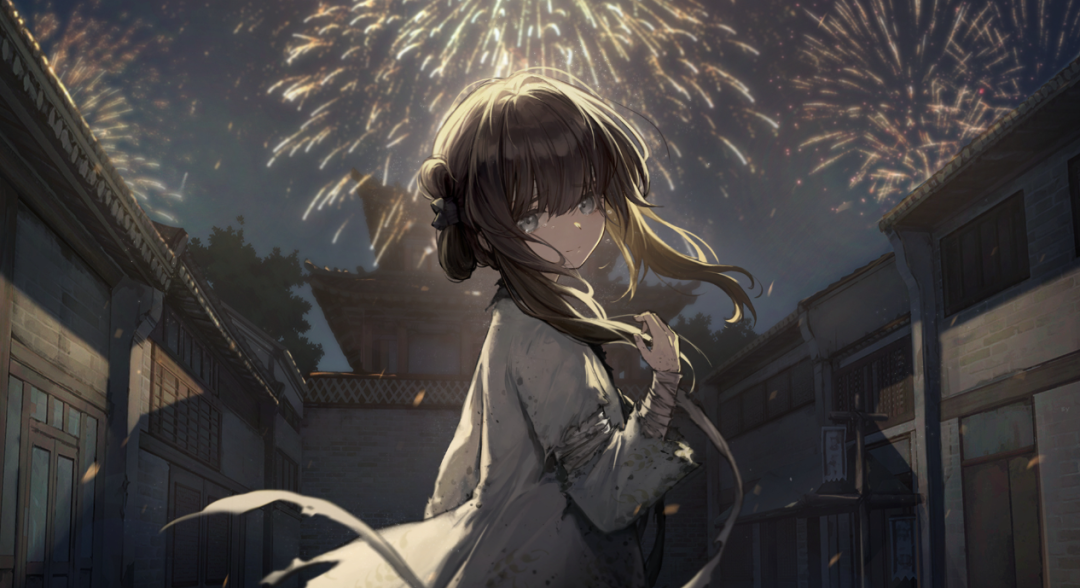
He explained: "But if you look at the later parts where she voices the carriage regret ending and the fireworks departure scene, there's no such problem."

Actually, after that, Ji Ling and I also talked about some specific techniques, operational details, and historical fiction writing.

There's really a lot I wanted to write about.

But that would require massive space explaining things unrelated to Hungry Lamb.

The length wouldn't allow it, and it wasn't the original intention of writing this article.

Ji Ling and I hadn't seen each other for a long time, but when we sat down to chat again, we were in that same relaxed and carefree state. I think that's important.

It's not to emphasize how amazing Ji Ling is for balancing commercial success and script expression, but because he always knows what he wants.

If I have to find an ending for this article, I think this state is very fitting.

I remember leaving the office, and we said we'd find somewhere to grab a bite.

While walking, I joked with him: "I think someone like you, combining national galgames, anime, and history, should be able to open a new path for national galgames, right?"

Ji Ling only humbly replied: "Hard to say."

"Is it because people who like history don't necessarily like focusing on the small people in the tides of history?" I thought along the lines of his answer. "True, the more books many people read, the stronger their desire to express themselves, and the more prone they are to getting literary pretensions."

"Maybe."

Ji Ling walked ahead of me. The setting sun, gradually falling between the buildings, was still pouring its lingering heat. The afterglow cast shadows on his face.

He looked like a literary youth.

"I just mean, before writing these things, you still have to remember it's an ACG work... There has to be love."

I thought about it, Ji Ling is right.

"Officer, are you there? I'd like to report someone."

"This guy fell in love with a thousand-year-old female ghost, then went off to harass underage girls in the late Ming Dynasty."